Leave Your Message

China Best Transparent Spherical Screen Manufacturer?

Finding the right China-based transparent spherical screen manufacturer takes more than comparing prices or promotional images. Buyers need to examine display clarity, sphere size, pixel pitch, brightness, viewing angles, and the structure supporting the screen. A Transparentsphericalscreen can create a striking suspended visual, but its performance depends on careful engineering and suitable installation conditions. Details matter.

This introduction outlines practical ways to assess manufacturers, including their production capabilities, customization process, quality checks, and after-sales support. Ask for recent project examples, clear technical specifications, and a sample or demonstration when possible. Confirm how the display handles content playback, maintenance access, and the intended indoor environment. These checks help distinguish verifiable capabilities from vague claims.

No single supplier is automatically the best choice for every project. A retail installation may require different dimensions and viewing conditions than an exhibition or event space. It is also worth asking about lead times, packaging, installation guidance, and how defects are handled. Some details may remain unclear until a design is reviewed; that deserves attention, not guesswork. By comparing evidence and asking focused questions, buyers can make a more informed shortlist of Chinese manufacturers and identify a screen that fits their actual requirements.
China Best Transparent Spherical Screen Manufacturer?

What Is a Transparent Spherical Screen and How Does It Work?

What Is a Transparent Spherical Screen and How Does It Work?

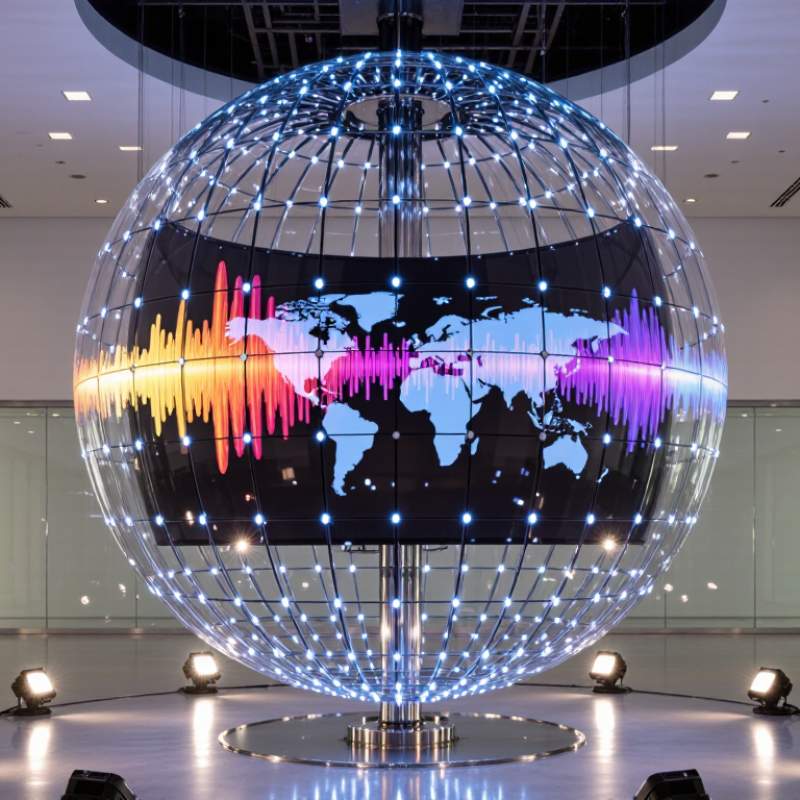
A transparent spherical screen is a curved LED display built from narrow modules arranged around a supporting frame. Gaps between the LED strips let viewers see through the structure. When the LEDs light up, they form images across the sphere’s surface. The effect is striking: a moving graphic can appear to float in the room. The screen is not a solid glass ball.

A control system divides video into mapped sections, then sends each section to the right LEDs. Because a flat image must wrap around a curved surface, content needs careful distortion correction. Otherwise, circles may look oval and text may bend. Pixel pitch, viewing distance, brightness, and the sphere’s diameter all affect clarity. A closer viewer usually notices gaps and uneven alignment sooner.

Transparency is not the only measure of quality. Module spacing can improve visibility through the screen, but may reduce image detail. Heat, cable routing, and access for maintenance also matter, especially in dense indoor installations. Grand View Research valued the global digital signage market at US$28.83 billion in 2023 and projected 8.1% annual growth from 2024 to 2030. That broader market figure does not measure spherical screens specifically, but it shows the expanding context for display installations. The practical trade-off is easy to underestimate. A compelling demo may not reveal how the screen performs under bright ambient light or with detailed content.
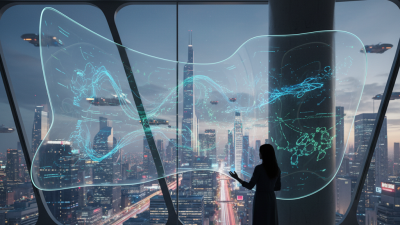
Key Features and Applications of Transparent Spherical Screens

Key Features and Applications of Transparent Spherical Screens

Transparent spherical screens combine a curved LED structure with an open mesh or grid. Their see-through design keeps surrounding displays and architecture partly visible. Flexible modules can follow a sphere’s contour, while mapped content wraps around its surface. Fine pixel pitch supports closer viewing, but adds cost and installation complexity.

The Grand View Research digital signage report valued that market at USD 28.8 billion in 2023 and forecast 8.1% annual growth from 2024 to 2030. This broader market figure is not specific to spherical screens, but it reflects growing demand for visual communication. Transparent spheres suit exhibition halls, retail windows, museums, and event spaces. A slowly rotating globe can show weather patterns or product details without blocking the view behind it.

Performance depends on more than appearance. Brightness must suit ambient light, and content needs careful mapping to avoid stretched graphics at the edges. Seam lines may remain visible.

Not magic.

In practice, teams should test viewing distance, pixel pitch, and structural support with sample content before installation. A transparent screen can feel airy, yet fine text may still be hard to read. That trade-off deserves honest attention.

How to Assess Transparent Spherical Screen Manufacturers in China

Assessing a transparent spherical screen manufacturer in China starts with the intended installation. Share the sphere’s diameter, viewing distance, indoor lighting, and content format. Ask how pixel pitch, transparency, brightness, and viewing angle affect image clarity from different positions. Details matter.

Request a working sample or a live demonstration using your own test images. Inspect the sphere from several angles, especially where modules meet. Look for uneven brightness, visible seams, color shifts, and reflections from nearby lights. Ask for test records tied to the exact screen configuration, not just general product specifications. A bright showroom demo can be misleading. It may not reflect performance in your venue.

Review how the manufacturer handles curved-module tolerances, heat management, control systems, and access for maintenance. Ask for installation drawings, replacement procedures, warranty terms, and references from comparable projects. Verify whether the quoted configuration includes processors, cabling, and on-site support. A factory visit or detailed video walkthrough can help confirm production capability, though neither guarantees long-term reliability. I would also leave room for uncertainty: technical documents may look complete while practical details remain unclear. Ask direct questions, record the answers, and compare them against a sample before committing.

Manufacturing Capabilities and Quality Standards to Compare

China Best Transparent Spherical Screen Manufacturer?
Manufacturing Capabilities and Quality Standards to Compare

Choosing a transparent spherical screen manufacturer starts with its production process, not a catalogue image. Ask how the display is formed around the sphere and how installers manage seams, wiring, and access points. These details affect the finished appearance. Small gaps matter. Request samples or photographs taken under different lighting, not only bright showroom conditions.

Compare measurable quality standards, including pixel pitch, brightness uniformity, transparency, color consistency, and viewing angle. Ask whether inspection records cover the full spherical surface or just flat sample panels. A useful supplier can explain its measurement method and provide repeatable test results. Check how the screen performs after extended operation, too. Heat can reveal weak connections or uneven brightness. No single metric tells the whole story, and a specification sheet may miss real installation limits.

Tips: Ask for a sample section with the intended curvature. Confirm how packaging protects the surface, and request clear guidance for cleaning and replacement. Compare warranty terms and production tolerances. If answers are vague, pause and ask again. Even a careful checklist has gaps; site conditions can change what “uniform” looks like.

China Transparent Spherical Screen Manufacturers: What to Compare

Suggested evaluation emphasis for comparing manufacturing capabilities and quality controls (%)

Use this proposed scorecard to structure supplier reviews: prioritize pixel-pitch consistency, luminance uniformity, transparency verification, and documented testing. The percentages are suggested review weights, not measured manufacturer results or requirements mandated by a standard. Ask suppliers for product-specific test reports, inspection records, and traceability documentation.

Choosing a Manufacturer for Your Project Requirements

China Best Transparent Spherical Screen Manufacturer?

Choosing a manufacturer for a transparent spherical screen starts with the project, not a catalogue. Define the sphere’s diameter, viewing distance, pixel pitch, and installation location.

A lobby display facing bright windows may need different brightness from a dim exhibition space.

Measure twice. Ask how the display handles curved seams, cable routing, and access for maintenance.

Request a sample or a small working section before approving full production. Check image clarity from several angles, transparency under the room’s actual lighting, and whether motion looks smooth at your intended content speed.

Ask for clear specifications on brightness, refresh rate, power use, controller compatibility, and operating conditions.

A neat demo is useful, but it may not represent the final sphere. Confirm how the manufacturer tests fit and alignment across the complete structure.

Project support matters, too. Share drawings, mounting limits, delivery dates, and content requirements early. Ask who reviews these details and what happens if a prototype needs adjustment.

Compare written answers, not just quoted prices. One common mistake is choosing the finest pixel pitch without checking viewing distance; the extra cost may bring little visible benefit.

Trade-offs are real. Even with careful checks, custom installations can reveal surprises on site, so leave time for testing and practical adjustments.