
Leave Your Message

China Top Transparent Double Sided Display Screen Supplier

A Transparent Double Sided Display Screen can present content to viewers on both sides while preserving a view through the glass. This makes it a practical option for shopfronts, exhibition spaces, and selected indoor partitions. Yet transparency alone does not determine whether a screen will work well. Brightness, pixel pitch, viewing distance, ambient light, and installation position all affect the result. Details matter.

When comparing suppliers in China, buyers should look beyond product images and headline specifications. Ask for clear technical datasheets, operating conditions, sample videos, and details about quality checks. A useful supplier can explain how the display performs in a bright storefront, how cables are routed, and what support is available after installation. Requesting a demonstration under lighting similar to the project can reveal issues that a brochure may not show.

There is no single screen for every window. Higher transparency may soften the appearance of content, while stronger brightness can affect power use and heat management. These trade-offs deserve discussion before an order is placed. Some teams discover them late. A careful review of dimensions, mounting requirements, control systems, warranty terms, and replacement procedures helps reduce avoidable surprises. The best supplier is not simply the one offering the lowest price; it is the one that can provide relevant evidence, answer specific questions, and communicate limitations clearly. That matters more than polished claims.
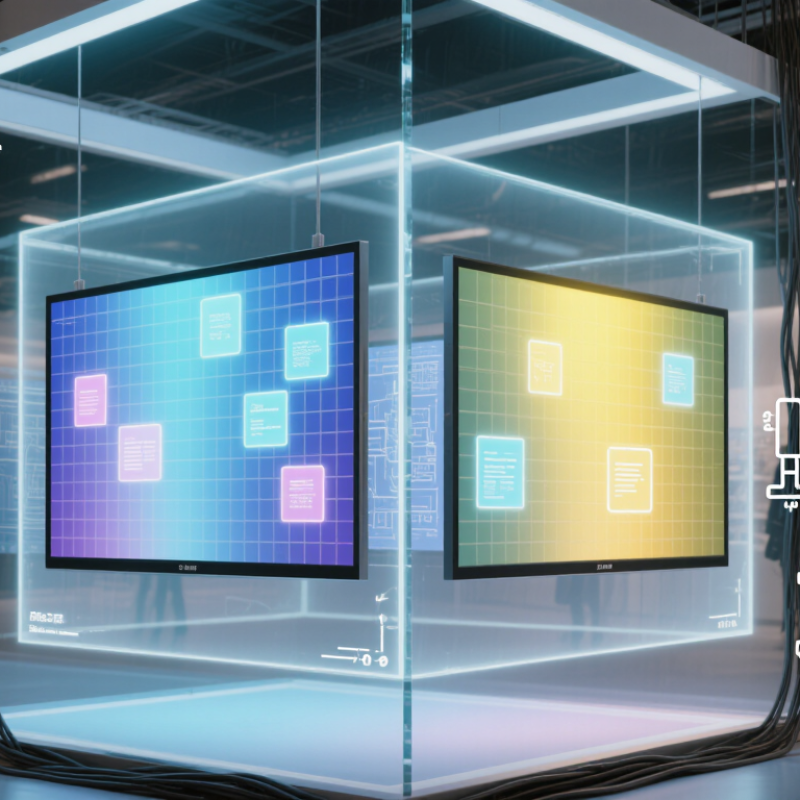
China Top Transparent Double Sided Display Screen Supplier

What Is a Transparent Double-Sided Display Screen?

What Is a Transparent Double-Sided Display Screen?

A transparent double-sided display screen presents digital content toward viewers on both sides while allowing light and some background detail to pass through. Many systems use two display panels mounted back-to-back; others use a shared transparent panel. The exact construction affects brightness, image control, and how clearly each side can be seen.

In a shop window, for example, one side might face people outside while the other faces customers indoors. The view-through effect is useful, but it is not perfect. Strong daylight, busy backgrounds, and reflections can make images harder to read.

MarketsandMarkets’ Transparent Display Market report projected growth from about US$1.2 billion in 2023 to US$4.2 billion by 2028, a 28.2% compound annual growth rate. This estimate covers transparent displays broadly, not double-sided screens alone. It signals wider industry interest, but it does not prove that every installation will perform well.

Buyers should check measured transparency, brightness, viewing angles, heat handling, and whether each side can show separate content. A simple on-site test helps: view the screen from both sides under the actual lighting. Small text can disappear against a bright street. That detail is easy to overlook.

How Transparent Double-Sided Displays Work

A transparent double-sided display lets viewers see images and objects behind its glass-like screen. In many installations, two display panels sit back-to-back inside a clear enclosure. Each panel faces a different audience. A controller sends separate or synchronized video signals, while the frame hides cables and electronics. Some systems use transparent OLED panels, whose pixels emit light directly. Unlit areas remain see-through. Transparent LCD designs work differently: they need a light source behind the panel, which can reduce clarity. The structure matters. Two panels can create reflections, heat, and thicker edges.

Image brightness must compete with daylight. That is why installers check ambient light, viewing distance, and the background behind the screen. Dark objects often make images easier to see; bright windows can wash them out. Small details matter. Panel spacing and anti-reflection layers can affect viewing from either side. One limitation is easy to miss: content designed for one direction may look reversed from the other. MarketsandMarkets’ Transparent Display Market report estimated a USD 2.3 billion market in 2024 and projected USD 4.7 billion by 2029, a 15.3% compound annual growth rate. This is a market forecast, not proof that every installation performs equally well. Real-world testing remains essential.

How Transparent Double-Sided Displays Work

A common single-panel layout lets viewers see content from both sides while ambient light passes through the display.

The bars show structural counts in a simplified single-panel design, not measured product performance. Image orientation and content may vary by display design.

Key Features and Common Product Configurations

China Top Transparent Double Sided Display Screen Supplier

Key Features and Common Product Configurations

Transparent double-sided displays show different content toward shoppers inside and outside a storefront. Common options include suspended glass-mounted units, freestanding cabinets, and modular LED panels fitted across a window. Choose by viewing distance, ambient light, installation depth, and required transparency. Pixel pitch affects image detail; brightness must suit daylight without washing out indoor content. Ask suppliers for measured brightness, transparency, and power consumption—not just promotional specifications.

MarketsandMarkets valued the global digital signage market at USD 27.8 billion in 2024 and forecast USD 40.9 billion by 2029. This covers digital signage broadly, not transparent displays alone. It signals growing investment in display infrastructure, but does not prove every transparent-screen project will pay off. Performance depends on placement and content, too. A bright atrium and a shaded shop window are different environments.

Tips: Request a working sample or site test before ordering. Check both viewing sides at the intended distance, then inspect text against a bright background. Confirm mounting access, cooling, and maintenance clearance. Small details matter. Transparency can also reduce image contrast; that trade-off is easy to underestimate. Use the supplier’s technical report and verify key measurements independently where possible.

Applications Across Retail, Transport, and Public Spaces

Transparent double-sided displays let retailers show promotions on both sides of a glass storefront while keeping products visible behind the screen. A customer outside might see a seasonal offer; someone inside can catch directions or a service notice. OAAA reported that U.S. out-of-home advertising revenue reached $9.1 billion in 2024, with digital formats contributing about 34% of the total. That growth points to demand for digital messages in physical places, though it does not guarantee every screen will perform well. Sightlines matter.

Transport hubs offer another practical use. ACI World estimated global airport passenger traffic at 9.5 billion in 2024, creating busy environments where timely wayfinding and service updates can help. Screens near entrances, ticketing areas, or platform windows can present information without fully blocking the view. But glare, changing daylight, and viewing distance affect legibility. A display that looks sharp indoors may struggle beside a sunlit concourse.

In public spaces, transparent screens can share event notices or civic information while preserving a sense of openness. UN DESA projected that 68% of the world’s population could live in urban areas by 2050, increasing pressure on shared spaces and their communication systems. For buyers sourcing from China, request real-world samples and check brightness, contrast, viewing angles, and installation needs. The compromise is real: transparency can soften image visibility. Test it on site.

How to Evaluate a Chinese Display Screen Supplier

China Top Transparent Double Sided Display Screen Supplier

How to Evaluate a Chinese Display Screen Supplier

Transparent double-sided displays must balance visibility, brightness, and light transmission. Ask suppliers for measured values, not isolated marketing claims. Request the test conditions too: viewing distance, ambient light, and content type can change what viewers actually see.

MarketsandMarkets’ Digital Signage Market report estimates the global market at USD 27.8 billion in 2024, rising to USD 35.94 billion by 2029. This broad category includes many display types; it does not measure transparent double-sided screens alone. Use it as market context, not proof of a supplier’s performance. Ask for recent production records, component specifications, and a sample unit you can inspect under your own lighting.

Check carefully. A polished showroom demo may hide uneven brightness or slow repairs. Run content on both sides for several hours and look for glare, color mismatch, heat, and visible seams. Then test it. Confirm warranty coverage, spare-part availability, and response times in writing. A supplier’s answers may feel less impressive than its sample. That is worth noticing. Request references for similar installations, and verify whether reported performance comes from an independent test or the supplier’s own laboratory.

China Top Transparent Double Sided Display Screen Supplier - How to Evaluate a Chinese Display Screen Supplier

Evaluation Dimension What to Check Evidence to Request Practical Evaluation Guide Weight Score (1–5)
Transparent display performance Confirm the display technology, transparency, brightness, resolution, viewing angle, and intended indoor or outdoor use. Model-specific datasheet, test conditions, and a live demonstration using the proposed configuration. Compare like-for-like specifications. Check whether brightness is stated in cd/m² and whether transparency is measured or estimated; results depend on panel design and measurement method. 15% —
Double-sided viewing and content Verify that the display supports the required front-and-back presentation, image orientation, content layout, and brightness settings. Demonstration from both sides, sample content files, and written confirmation of supported operating modes. Check for mirrored or independently configurable content, as required. Confirm how ambient light and viewing direction affect legibility. 12% —
Product fit and installation Check dimensions, weight, mounting method, ventilation needs, cable access, and compatibility with the installation site. Dimensioned drawings, mounting details, power requirements, and installation instructions. Request drawings for the exact quoted model. Verify structural support, service access, and any clearance requirements before ordering. 10% —
Image quality and consistency Assess color uniformity, brightness uniformity, contrast, refresh behavior, and visible defects across the display area. Unedited demonstration footage, inspection criteria, and a sample acceptance checklist. Inspect the full screen with solid-color and moving-content tests. Agree on measurable acceptance criteria before production. 10% —
Reliability and environmental suitability Review operating temperature and humidity limits, expected service conditions, component traceability, and reliability testing. Product specifications, relevant test reports, and documented quality-control records. Match the stated operating conditions to the actual site. Do not treat a test report as proof of performance beyond its stated model and test conditions. 10% —
Quality management and production control Evaluate incoming inspection, in-process checks, final testing, defect handling, and serial-number traceability. Quality procedures, sample inspection records, and a description of production and final-test stages. Ask how defects are recorded and corrected, and whether the supplier can provide inspection evidence tied to the shipped units. 10% —
Certifications and compliance Confirm the product’s electrical, electromagnetic compatibility, and other regulatory requirements for the destination market. Applicable certificates and test reports that identify the product or model being quoted. Check validity, scope, issuing body, and model coverage. Requirements differ by destination and product configuration. 8% —
Warranty and after-sales service Review warranty duration, covered parts, exclusions, response process, spare-parts availability, and technical support. Written warranty terms, service procedure, and a parts and support plan. Confirm who handles troubleshooting, shipping costs for replacement parts, and whether the warranty applies in the destination country. 8% —
Communication and project execution Assess response clarity, technical understanding, drawing approval, change control, and ability to provide progress updates. Written answers to technical questions, project schedule, and sample approval documents. Use a specification checklist and record agreed changes in writing. Clear communication reduces avoidable specification and delivery errors. 7% —
Commercial terms and total cost Compare quoted configuration, tooling or customization fees, packaging, shipping terms, payment schedule, and support costs. Itemized quotation, stated trade terms, lead-time estimate, and written payment conditions. Compare the complete delivered scope rather than unit price alone. Confirm what is included and identify any recurring or optional costs. 5% —
Packaging and shipment readiness Review protective packaging, handling instructions, shipment dimensions, and preparation for the selected transport method. Packaging specifications, shipment packing list, and handling or storage instructions. Confirm packaging is appropriate for the product’s size, fragility, and route. Agree on inspection and damage-reporting procedures. 5% —
Total weighted score Score each dimension from 1 (weak or insufficient evidence) to 5 (strong, documented evidence). Calculate each weighted score as rating ÷ 5 × weight. 100% —

Scoring note: This is a supplier-evaluation framework, not a product certification or universal performance standard. Set project-specific requirements and verify claims against the exact model, configuration, and destination-market requirements.