How to Choose the Best Transparent Film Led Ball Screen?
In the world of visual displays, choosing the right Transparent Film Led Ball Screen is crucial. Industry expert Dr. Emma Lu, a leading specialist in display technologies, emphasizes, "The perfect balance of clarity and transparency is key in selecting a transparent film screen." This statement highlights the importance of understanding both function and aesthetics in design.
When considering a Transparent Film Led Ball Screen, evaluate the location's lighting conditions and the intended audience. Often, placement can greatly influence visibility and engagement. For instance, a brightly lit environment demands higher brightness levels in the screen for effective display. Additionally, look into resolution and pixel pitch; finer details can elevate the overall viewing experience.
However, not all products meet high standards. Some brands may promise premium quality but compromise on durability or performance. Therefore, transparency alone isn't enough; one must scrutinize specifications and reviews. A quick online search can uncover customer feedback and reveal hidden flaws. In the dynamic landscape of display technology, making the right choice requires diligence and insight.

Understanding Transparent Film LED Ball Screens
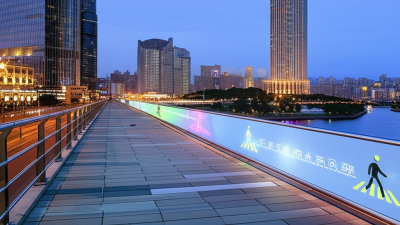
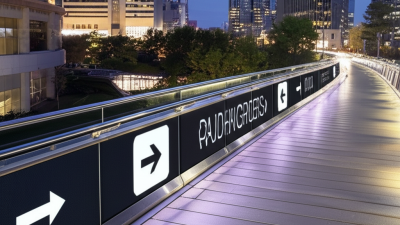
Transparent film LED ball screens are an innovative technology, merging display and design. They allow for stunning visuals while maintaining transparency. This feature is essential for creating immersive environments. Events or shows can seamlessly incorporate them into existing decor. Their ability to blend in makes them a popular choice for modern architecture.
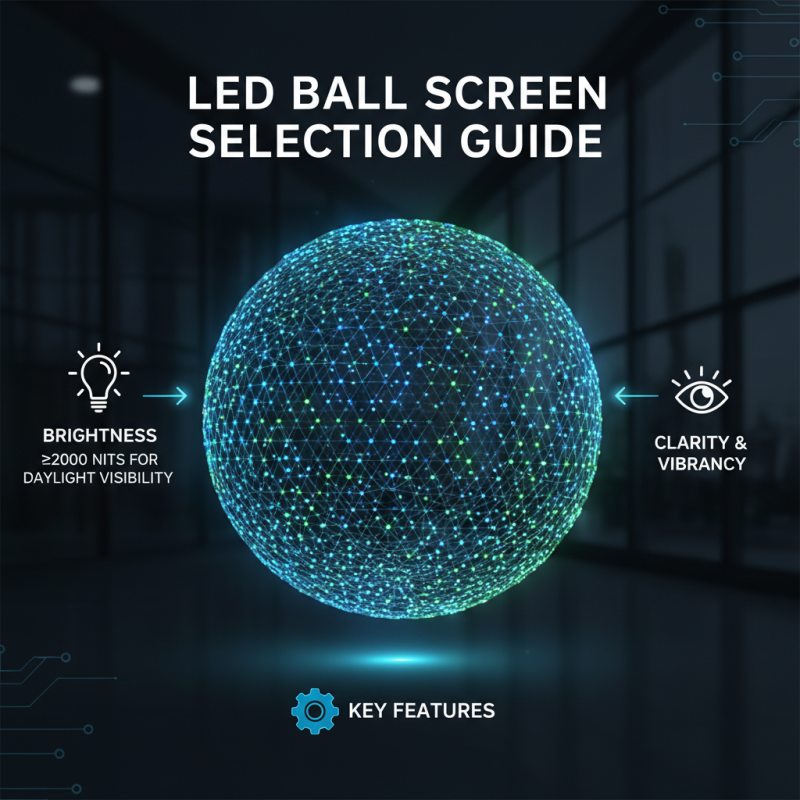
When choosing a transparent film LED ball screen, clarity and brightness are vital. A screen that is too dim might detract from the overall experience. Additionally, consider the viewing angles. A screen that looks great from one perspective might fail from another. These factors can be overlooked during the selection process, leading to less than ideal outcomes.
Installation is another key point. It's not a simple plug-and-play process. Proper mounting and calibration are crucial for effectiveness. If these steps are neglected, the screen’s potential diminishes. Investing time in the setup can make a significant difference. These screens offer versatility, but that does come with challenges. Each installation presents its own unique set of complications. Understanding these details helps in making a better choice.
Comparing Different Types of Transparent Film LED Ball Screens
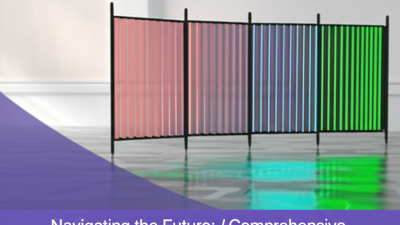
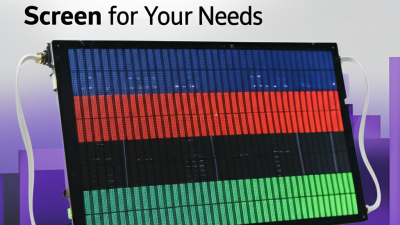
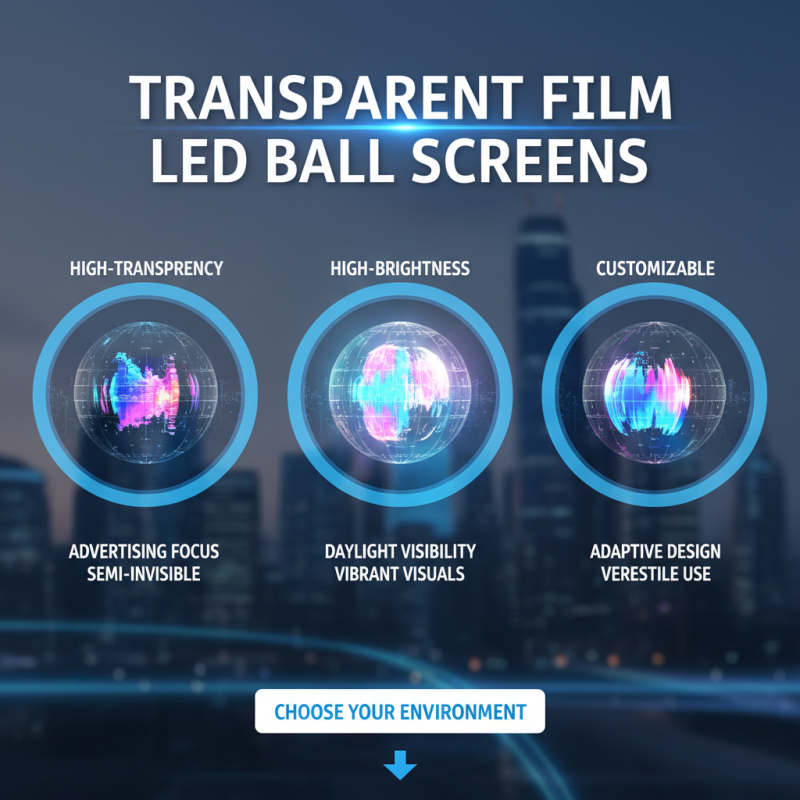
When it comes to transparent film LED ball screens, several types stand out. Each type has unique features that appeal to different needs. Some screens offer a high level of transparency, making them ideal for advertising. Others focus on brightness, ensuring clearer visuals in well-lit areas. It can be challenging to decide which type fits your environment best.
Consider the size and resolution of the display. Larger screens often require higher resolution for clarity from a distance. Many users overlook this detail, leading to disappointing experiences. Installation space is another factor. Some models are bulkier and may not fit well in small areas. Play around with scaled models to understand how each fits in your space.
Investing time in comparing these types is essential. Examine your objectives closely. Some screens are durable but may lack the vivid colors needed for effective advertising. Performance can also vary in different climates. Users may need to adjust their choices based on humidity or temperature fluctuations. Testing in real scenarios can reveal shortcomings, ensuring you make an informed decision.
Evaluating Installation and Maintenance Requirements
When evaluating installation and maintenance requirements for a transparent film LED ball screen, several factors come into play. The installation process should be straightforward yet requires careful planning. Ideally, the site should have suitable mounting points. It is crucial to ensure that the wall or structure can support the screen’s weight. If not, unexpected complications may arise.
Accessibility for maintenance is another key aspect. Screens should be placed where they can be easily reached. If they are too high or behind other structures, repair work can become complicated. Regular maintenance checks are vital. They help in identifying potential issues before they escalate. Ignoring this can lead to costly repairs or even screen failure.
Moreover, environmental considerations should not be overlooked. High humidity or extreme temperatures can affect screen performance. It may be necessary to add protective measures if the environment is not ideal. Ultimately, paying attention to installation and maintenance requirements can enhance the longevity of the display. Neglecting these aspects might result in frustrations and reduced operational efficiency.
Analyzing Cost and Budget Considerations for Your Purchase
When considering a transparent film LED ball screen, cost is a major factor. Prices can vary dramatically based on size, technology, and features. It's crucial to set a budget early on. For instance, smaller screens may start at lower costs, but larger screens can quickly inflate expenses.
Evaluate your specific needs. Will the screen be used indoors or outdoors? Outdoor screens typically require more durable materials and advanced features. These can add to the cost. Consider the installation fees as well. Professional installation might be ideal for larger screens but will also increase your overall budget.
Don't forget to factor in ongoing costs. Maintenance, electricity, and potential repairs can add up over time. Striking a balance between quality and budget is essential. Reflect on your priorities. Sometimes, a cheaper option may not deliver the quality you expect. Invest what you can afford, but ensure that it meets your needs effectively.
Transparent Film LED Ball Screen Cost Analysis