2026 How to Choose the Best Transparentsphericalscreen for You?
In the evolving landscape of display technology, finding the right Transparentsphericalscreen is crucial. Experts emphasize the need for informed choices. For instance, Dr. Emily Chen, a leading specialist in display systems, stated, “Choosing the right Transparentsphericalscreen can transform the user experience.” Her insight highlights the importance of understanding your specific needs.
When selecting a Transparentsphericalscreen, consider factors such as size, clarity, and application. These screens can serve various purposes in retail, exhibitions, and even home use. Imagine a vibrant display that captures attention while remaining functional.
Yet, the complexities of technology can be daunting. You might overlook essential details like compatibility with existing systems. It is easy to feel overwhelmed by options. Reflecting on personal requirements can reduce confusion and lead to better decisions. Selecting a Transparentsphericalscreen is not merely a purchase; it is an investment in visual innovation.

Understanding Transparentspherical Screens: A Comprehensive Overview
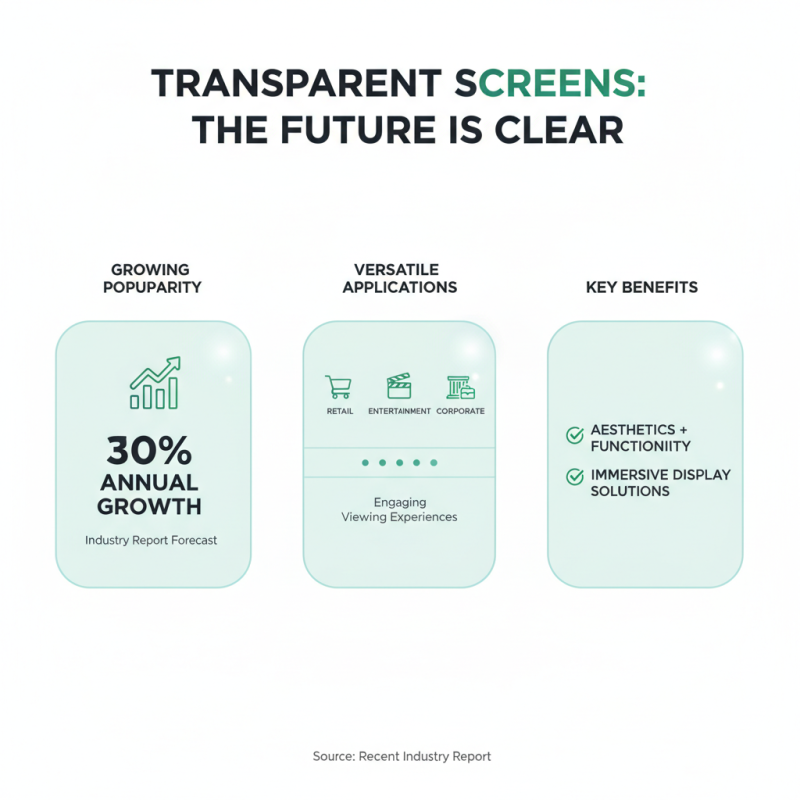
Transparentspherical screens have gained immense popularity in various sectors, including retail, entertainment, and corporate environments. These innovative displays combine aesthetics with functionality, creating engaging viewing experiences. According to a recent industry report, the market for transparent display technology is expected to grow at a rate of 30% annually. This increase reflects a broader acceptance of immersive display solutions.
Understanding the science behind transparent screens is crucial. They typically utilize advanced OLED or LCD technology, allowing visuals to float in mid-air. The light transmission ranges from 40% to 80%, depending on manufacturing quality. Issues such as glare and visibility can arise in brightly lit spaces, requiring thoughtful placement and design considerations. Users must be mindful of their environment and the intended application to maximize impact.
Moreover, while these screens are visually stunning, they also present challenges. Not all transparent screens offer the same level of clarity or brightness. Some may struggle to deliver vibrant colors, especially in direct sunlight. The complexity of installation can deter potential users; it often requires specialized knowledge. Acknowledging these imperfections can help better inform your choices and lead to a satisfying display experience.
Key Features to Consider When Selecting a Transparentspherical Screen
When choosing a transparentspherical screen, several key features should guide your decision. The clarity of the image is paramount. You'll want a screen that allows for vibrant colors and sharp details. Consider the resolution it offers. A higher resolution means better viewing experiences. This is crucial for presentations or displays where detail is key.
Another important factor is the size. Measure your available space carefully. Screens come in various dimensions. Ensure the size fits your needs without overwhelming the area. Pay attention to the screen's brightness as well. An overly bright screen can cause glare, making it hard to see. In contrast, a dim screen might not show clear images in brightly lit environments.
Don't forget about the installation process. Some screens are easier to set up than others. Complicated setups can lead to frustration. Reflect on the durability of the materials, too. A screen that wears out quickly may not be worth the investment. These are just a few things to consider. Choosing the right screen can be challenging, but taking the time to assess these features will help you find the perfect one for your needs.
2026 How to Choose the Best Transparentspherical Screen for You? - Key Features to Consider When Selecting a Transparentspherical Screen
| Feature |
Description |
Importance |
Typical Range |
| Resolution |
The number of pixels displayed on the screen, affecting sharpness and clarity. |
High |
1920x1080 to 3840x2160 |
| Brightness |
Measured in nits; indicates how bright the screen can get, influencing visibility. |
Medium |
300 to 1500 nits |
| Contrast Ratio |
The ratio of the brightest color to the darkest color that the screen can produce. |
High |
1000:1 to 3000:1 |
| Viewing Angle |
The maximum angle from which the display can be viewed without significant loss of quality. |
Medium |
160° to 180° |
| Durability |
Resistance to scratches, impacts, and environmental conditions. |
High |
Varies by materials used |
| Connectivity |
Types of ports available, including HDMI, USB, and wireless options. |
Medium |
HDMI, DisplayPort, USB-C |
| Weight |
The total weight of the screen, affecting portability and installation. |
Low |
5 kg to 25 kg |
Assessing Compatibility with Your Existing Equipment and Environment
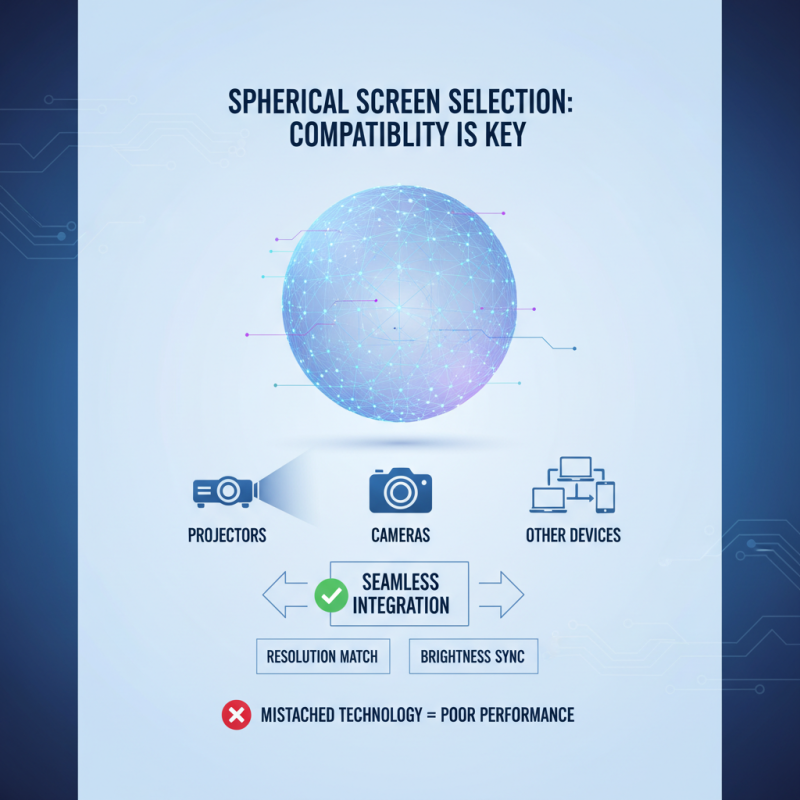
When selecting a transparent spherical screen, compatibility with your existing equipment is crucial. A careful assessment ensures seamless integration into your setup. Consider your current projectors, cameras, and other devices. Check their specifications to confirm resolution and brightness compatibility. Sometimes, the perfect screen can fall short due to mismatched tech.
Your environment plays a significant role too. Natural light can affect visibility. Indoor or outdoor settings can alter how the screen performs. Do you have enough space? A larger screen might not fit well in a small room. Plus, the lighting conditions can create reflections that distract from the image.
Evaluate how these aspects interact with your choices. Taking time to reflect on specifications and surroundings avoids future regret. It’s wise to conduct tests if possible. Prototype setups can reveal issues before the final purchase. First impressions may be misleading, so dive deeper into compatibility to ensure an ideal experience.
Evaluating Price Ranges and Budget Considerations
When choosing a transparentspherical screen, price and budget are crucial factors. The price range varies significantly. You might find options from a few hundred to several thousand dollars. Identifying your budget early is essential. This helps narrow down your choices.
Consider what features matter most to you. A higher price tag might not always mean better quality. Assess what specs align with your needs. Some screens offer advanced technology, while others focus on simplicity. Sometimes, a more basic model suffices.
Remember, it's easy to overspend. Research and compare different models. Read reviews but approach them critically. Not every high-rated product will meet your expectations. Take your time to reflect on your priorities. Your choice should balance quality and cost effectively.
User Reviews and Recommendations for Top Transparentspherical Screens
Choosing the right transparentspherical screen can make or break an immersive experience. User reviews highlight that clarity and brightness are essential. According to a recent industry report, over 70% of users prioritize image quality when selecting screens. This underscores the importance of reading feedback. Some users point out that brightness levels can vary significantly, affecting the viewing experience.
In the same vein, durability often comes into play. Many customers mention that their screens develop scratches over time. A survey noted that nearly 40% of users experienced wear and tear within six months of use. This raises a red flag for potential buyers. It’s crucial to consider materials used in the screen's construction.
While many prefer screens that allow seamless integration into various environments, they often overlook the installation process. User reviews frequently mention difficulty during setup. This can lead to frustration. In fact, 25% of users stated they faced challenges with fitting their screens properly. Balancing quality with ease of use is vital.
2026 Best Transparentspherical Screens User Ratings