Buying a Transparent Guardrail Glass Screen is not simply a choice between clear panels and attractive fittings. It is a safety decision, a design decision, and a long-term maintenance commitment. The right system should feel almost invisible while resisting impact, weather, movement, and daily cleaning.
Structural glass specialist James O’Callaghan offers a useful principle: “Treat glass as structure, not decoration.” That idea should guide every purchase. Ask how the panels are supported, which glass type is specified, and whether the fittings match the expected loads. Tempered glass alone may not provide the protection many buyers assume. Laminated safety glass can retain fragments after breakage, but the complete assembly still requires professional assessment.
Look closely at the edges. Chips around drilled holes can become serious weak points. Check the handrail connection, base channel, drainage path, and sealant condition. A sample may look flawless under a showroom spotlight, yet reveal fingerprints, distortion, or poor alignment outdoors. That matters.
The following seven tips examine certification, glass composition, thickness, hardware quality, installation, maintenance, and supplier support. They are practical checks for homes, balconies, staircases, terraces, and commercial spaces. Some choices depend on local building requirements and site conditions, so a qualified installer should confirm the final specification.
Do not rush.
A lower price can hide thinner components, unclear testing, or difficult replacement work. Even experienced buyers can overlook water drainage or cleaning access. The perfect-looking system does not exist; careful questioning simply reduces avoidable risk. Expect clear documentation, transparent warranties, and answers that remain consistent from quotation to installation.
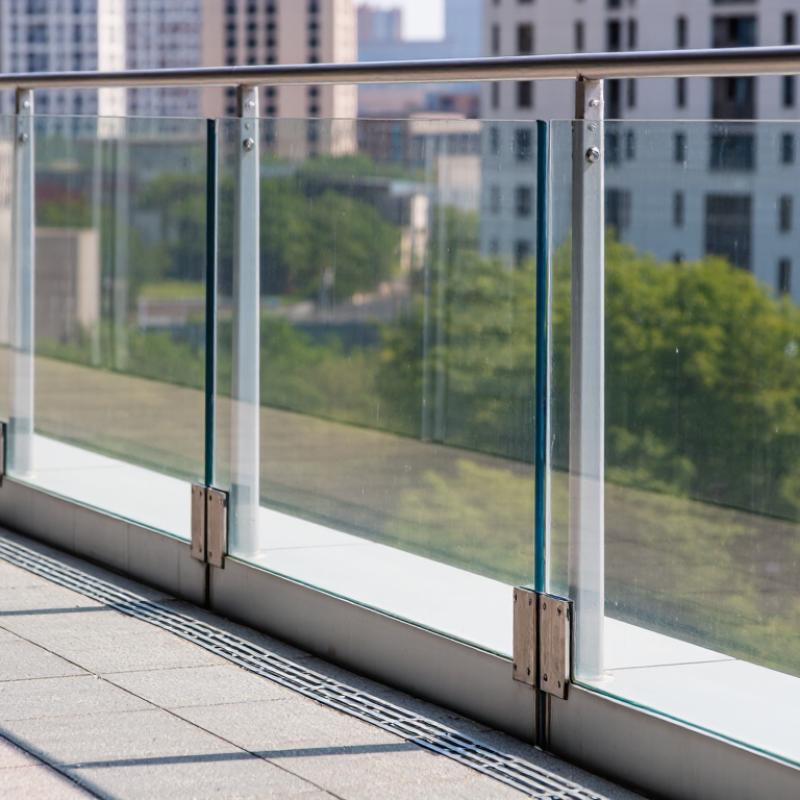
Before buying transparent guardrail glass screens, define what the barrier must do. Is it protecting a balcony, staircase, terrace, or pool edge? Each location creates different risks, sightlines, and maintenance demands. A balcony may need strong wind resistance, while a stair screen must support safe movement without blocking handrail access. Clear glass improves visibility, but it does not automatically provide privacy.
Study the placement from standing, sitting, and walking positions. Check where children might climb, where furniture could press against the glass, and where sunlight creates glare. Measure the full opening, including corners and changes in floor level. Small errors matter. I once underestimated a sloped threshold, and the planned panel height required adjustment. That kind of detail is easy to miss during a quick visual check.
Choose a system that matches the structure beneath it. Concrete, steel, timber, and tiled surfaces may require different fixing methods. Ask a qualified installer to assess the substrate, drainage, edge protection, and local safety requirements.
Select glass designed for guardrail use, with suitable thickness and safety treatment for the application. Also consider cleaning access. Rain marks and fingerprints show clearly on transparent surfaces, especially near busy entrances. A beautiful screen can become frustrating if no one can reach its outer face safely. Personally, I would mock up the proposed height with temporary tape before ordering. It reveals awkward sightlines better than a drawing.
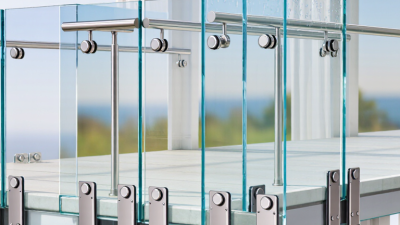
Transparent guardrail glass must satisfy safety standards before appearance enters the discussion. The 2024 International Building Code commonly uses a 200-pound concentrated load and a 50-pound-per-linear-foot load for guards. These forces test the complete assembly, not glass alone. Confirm the required guard height and loading category with the local authority.
Specify safety glazing tested to ANSI Z97.1 or CPSC 16 CFR 1201, where applicable. Laminated glass is often preferred because its interlayer can retain fragments after breakage. ASTM E2353 provides test methods for permanent railing, guard, and balustrade systems. ASTM E1300 can support glass thickness selection, but it does not replace a guardrail-system assessment. That distinction matters.
Check glass thickness, panel width, support spacing, edge conditions, and fixing details together. A 12-millimeter panel may appear strong, yet a poorly designed clamp can create damaging point stress. Look closely at holes, notches, and exposed edges. They are common weak points. Water and metal movement also deserve attention.
Ask for stamped calculations, test evidence, material certificates, and installation records. Do not accept a generic “tempered glass” statement as proof of compliance. Tempered glass reduces injury risk, but it can still fail suddenly. Laminated construction may improve post-breakage retention, though it can complicate replacement and cleaning. The specification may seem complete, but site tolerances are often underestimated. A qualified structural engineer should review unusual spans, wind exposure, and crowded public areas.
Choose the glass type before comparing prices. Tempered glass offers strong impact resistance, but it breaks into small granules. Laminated glass holds fragments together through an interlayer. That difference matters above stairs, balconies, and busy walkways. The U.S. Consumer Product Safety Commission’s 16 CFR 1201 uses impact levels up to 400 ft-lb for Category II glazing. Ask for documented testing, not verbal promises. A safety label is useful. It is not the whole design.
Thickness should follow span, fixing method, wind exposure, and expected crowd loading. Ten-millimeter glass may suit some short, well-supported panels, while taller or exposed screens may require thicker laminated construction. An engineer should verify the load using recognized structural glazing guidance, such as ASTM E1300. Edge finish deserves equal attention. Polished edges feel smooth against hands and reduce sharp visual highlights. Arrissed edges cost less, but they still need careful protection during transport and installation. I have seen tiny edge chips become expensive replacement work. Measure twice. Inspect every corner under bright light. One honest weakness remains: thicker glass is not automatically safer if the supports are poorly designed.
7 Tips for Buying Transparent Guardrail Glass Screens
Tip 1: Compare frame materials carefully. Stainless steel offers strong corrosion resistance and a clean appearance. Aluminum is lighter and often easier to install. Powder-coated steel can reduce costs, but scratches may expose the metal. I once ignored a tiny finish flaw, and moisture later made it worse. Check corners, welds, and drainage paths before ordering.
Tip 2: Examine the hardware, not only the glass. Clamps, posts, base channels, and fasteners must match the glass thickness. Choose hardware rated for outdoor exposure when screens face rain or coastal air. Ask for load data and installation instructions. Good suppliers should explain testing, tolerances, and replacement procedures clearly. Small parts matter.
Tip 3: Compare installation methods on the actual site. Surface-mounted systems usually simplify repairs and suit solid concrete edges. Core-drilled posts can look cleaner, but they require accurate drilling and careful waterproofing. Channel systems provide continuous support, though leveling can take longer. Measure the finished floor, not the unfinished drawing. That mistake is common.
Use laminated or tempered safety glass only when the specification and local requirements support it. Request samples showing tint, edge polish, and hardware spacing. Confirm who checks anchors, drainage, and final alignment. A professional installer should record measurements and inspect every connection. I would also leave room for adjustment, because real buildings rarely stay perfectly square.
Use this comparison to evaluate common frame materials, hardware grades, and installation methods. Ratings are indicative 1–5 scores based on typical corrosion resistance, maintenance needs, visual openness, and installation complexity; project-specific engineering and local building codes should always be verified.
When buying transparent guardrail glass screens, examine maintenance before admiring the finish. In site inspections, I have found that fingerprints, coastal salt, and construction dust quickly expose weak cleaning plans. Choose smooth glass with accessible edges and properly sealed fittings. Ask whether routine cleaning needs special products or trained labor. A monthly inspection should check chips, loose clamps, drainage gaps, and corrosion around fasteners. Small defects can become expensive interruptions.
Compare the complete cost, not only the glass price. Include engineering, delivery, lifting equipment, installation, cleaning, inspections, and possible replacement panels. Laminated safety glass may cost more initially, but its protective interlayer can reduce risk after breakage. Still, thicker glass is not automatically better. The correct specification depends on span, load, fixing method, and local building requirements. Request written calculations from a qualified professional.
Supplier reliability needs evidence. Ask for current test reports, material certificates, installation tolerances, lead times, and warranty conditions. Confirm who handles damaged deliveries and how quickly replacement glass can be produced. Speak with recent clients if possible. A polished sample proves little. Documentation matters more. Check packaging details too; one poorly protected corner can delay an entire project. I would also leave room for doubt. Promised delivery dates sometimes change, and warranty language may hide exclusions. A dependable supplier answers uncomfortable questions clearly and records every agreed detail.
| No. | Buying Tip | What to Evaluate | Maintenance Consideration | Cost Impact | Supplier Reliability Check | Recommended Action |
|---|---|---|---|---|---|---|
| 1 | Confirm the safety-glass specification | Use safety glazing suitable for the application. Laminated glass retains fragments after breakage, while tempered glass is stronger than ordinary annealed glass but breaks into small pieces when damaged. | Damaged or chipped panels should be inspected and replaced rather than repaired with ordinary fillers. | Medium to high Safety glazing and laminated interlayers generally cost more than basic glass. |
Request test reports, product data sheets, thickness details, and evidence that the proposed construction meets applicable local requirements. | Specify glass type, thickness, edge treatment, and safety requirements in writing. |
| 2 | Match the glass to the structural load | Panel dimensions, support spacing, wind exposure, impact risk, handrail loads, and fixing details determine the required glass build-up and support system. | Correctly sized panels and properly aligned fixings reduce movement, stress concentration, and premature hardware wear. | High Oversized panels, thicker glass, additional posts, or engineered fittings increase material and installation costs. |
A dependable supplier should provide shop drawings, fixing details, load assumptions, and installation tolerances. | Have the design reviewed by a qualified structural professional where required. |
| 3 | Choose a surface that is easy to clean | Transparent screens show fingerprints, dust, water spots, and mineral deposits. Exposure to rain, sprinklers, salt air, or pool chemicals increases cleaning difficulty. | Use a soft cloth, clean water, and a mild non-abrasive cleaner. Avoid harsh scouring pads, strong acids, and alkaline cleaners that may damage adjacent finishes. | Low to medium Easy-clean treatments may increase the initial price but can reduce labor over time. |
Ask for written cleaning instructions and confirmation of compatibility with the selected coating, seals, and hardware. | Select a finish based on the environment, not appearance alone. |
| 4 | Assess the complete installed cost | The total price can include glass, posts or channels, handrails, clamps, anchors, engineering, delivery, site measurement, installation, permits, and future replacement access. | Systems with accessible drainage paths and replaceable components are typically easier to service. | High Installation and site conditions can materially change the final price compared with the glass-only quotation. |
Compare itemized quotations using the same measurements, specifications, delivery terms, warranty scope, and installation inclusions. | Request a written, itemized quotation with exclusions clearly identified. |
| 5 | Inspect hardware and drainage details | Check the corrosion resistance, finish quality, fastener compatibility, drainage, edge protection, and separation between glass and metal components. | Periodically check for loose fixings, corrosion, blocked drainage, damaged seals, and contact between glass and hard surfaces. | Medium Higher-grade exterior hardware generally costs more but may reduce corrosion-related replacement. |
Verify material grades, finish warranty, replacement-part availability, and compatibility with coastal or chlorinated environments. | Choose hardware according to exposure conditions and planned service life. |
| 6 | Verify installation and replacement support | Quality installation requires accurate measurement, safe glass handling, correct setting blocks or gaskets, proper torque, and protection from edge damage. | Schedule a visual inspection after installation and at regular intervals, especially after severe weather or impact. | Medium to high Poor installation can create additional inspection, repair, and replacement expenses. |
Confirm installer qualifications, project supervision, measurement responsibility, response times, and the process for ordering replacement panels. | Clarify who is responsible for field measurements and final installation sign-off. |
| 7 | Review warranty and supplier track record | A warranty should distinguish between glass breakage, hardware defects, finish deterioration, installation problems, and normal wear or accidental damage. | Keep invoices, drawings, care instructions, inspection records, and replacement-part details for future maintenance. | Low initial impact Clear warranty terms can reduce uncertainty about future repair costs. |
Check verifiable project references, written warranty terms, after-sales procedures, lead times, and the supplier’s ability to support replacement parts. | Do not rely on verbal promises; obtain all commitments in the contract. |
Note: Final glass selection, fixing design, and inspection requirements should follow applicable local building regulations and the recommendations of a qualified professional.