China’s leading Transparent Diving Screen manufacturers are redefining how underwater spaces are designed, observed, and maintained. These systems can create striking views between pools, training areas, and visitor zones. Yet visual appeal should never replace engineering discipline.
A reliable Transparent Diving Screen requires more than clear panels. Manufacturers must consider water pressure, panel thickness, edge protection, support frames, sealing systems, and long-term optical clarity. Experienced teams also evaluate impact resistance, thermal movement, cleaning chemicals, and installation tolerances. A small seal failure can cloud an otherwise impressive viewing wall. That detail matters.
Aquatic safety consultant Dr. Steve Thornton offers a useful principle: “Clarity is valuable only when safety remains visible.” His comment reflects a practical concern. A screen should support supervision, not create distracting reflections or hidden corners. Designers should examine sightlines from lifeguard stations, deck surfaces, underwater lighting, and emergency access points. Factory testing helps, but site inspection remains essential.
The strongest Chinese manufacturers usually provide drawings, load calculations, material certificates, installation guidance, and maintenance instructions. They may also customize curved panels, reinforced joints, and integrated lighting channels. However, buyers should not rely on attractive photographs alone. Some specifications remain unclear until independent verification is requested.
There is room for improvement. Industry comparisons often emphasize appearance more than service life. That approach feels incomplete. A truly dependable Transparent Diving Screen combines transparent materials, measured structural performance, careful installation, and responsive after-sales support. This guide examines manufacturers through those practical standards, while recognizing that every project has different risks, budgets, and operating conditions.
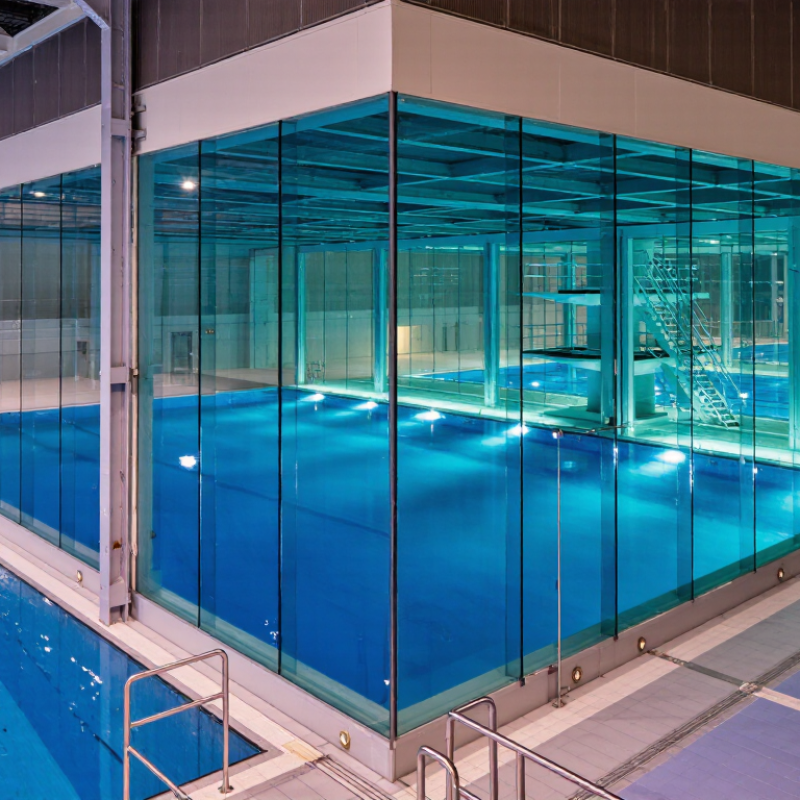
A transparent diving screen is a clear underwater barrier separating swimmers, divers, and viewing areas. It is commonly made from cast acrylic or laminated safety glass. The material must resist water pressure, impact, chemical exposure, and repeated cleaning. No screen is perfectly invisible. Reflections, bubbles, and lighting can reduce visibility.
Design begins with water depth, panel size, support spacing, and expected impact loads. Engineers should calculate deflection before selecting thickness. ASTM F2461 and EN 15288 provide useful guidance for public aquatic facility planning, although neither replaces project-specific structural calculations. Rounded edges reduce injury risks and simplify cleaning. Sealed joints also limit moisture intrusion and biological growth.
Visibility supports supervision. The World Health Organization reports about 236,000 drowning deaths globally each year, showing why clear sightlines matter. A well-designed screen lets staff observe body movement, hand signals, and distress beneath the surface. Anti-glare lighting helps, but excessive brightness can create blind spots. This is often overlooked. Manufacturers should provide tested optical clarity, impact performance, seal durability, and maintenance instructions. Independent inspection remains essential after installation, especially around anchors and connection points. Data sheets are useful, but field conditions can expose weaknesses that laboratory tests miss.

Transparent diving screens depend on material selection more than visual appeal. Acrylic is common because it is lighter than glass and offers strong optical clarity. Its impact resistance also supports large viewing panels. Polycarbonate is tougher under sudden impact, but it scratches more easily. Laminated safety glass provides stiffness and surface hardness, although its weight increases structural demands.
According to PlasticsEurope’s Plastics—The Fast Facts 2024, global plastics production reached about 414 million tonnes in 2023. This scale supports stable access to engineering polymers, but it does not guarantee suitable underwater quality. Manufacturers still need tested grades, controlled thickness, and documented UV resistance. Small defects matter.
Panel technology is equally important. Curved acrylic can reduce visual distortion when water pressure increases, while multi-layer laminates improve containment performance. Silicone or EPDM gaskets must remain elastic after repeated exposure to chlorine, sunlight, and temperature changes. A 2023 report from the International Swimming Pool and Spa Association highlights water chemistry as a major factor in equipment durability, reinforcing the need for compatible seals and coatings. Anti-fog films help, but they can wear faster than expected. This is an area requiring honest review. Pressure testing, optical inspection, edge polishing, and leak monitoring should be completed before installation. Standards such as ISO 12870 and relevant structural glazing requirements can guide testing, but project-specific engineering remains essential.
China Top Transparent Diving Screen Manufacturers
Manufacturing Standards for Chinese Transparent Diving Screen Producers
Reliable Chinese transparent diving screen producers treat safety as a process, not a polished brochure. In factory audits, buyers should inspect material certificates, cutting records, and pressure-test reports. Panels may use laminated glass, acrylic, or engineered composites, depending on pool depth and design. Each material requires different impact and aging controls.
Manufacturers should control panel thickness, edge finishing, seal compression, and frame alignment. Small gaps can become serious leakage points. Clear panels also need stable optical quality, without bubbles, clouding, or uneven reflections. Testing should cover water pressure, repeated loading, temperature changes, and seal performance. Production teams should record batch numbers and retain inspection photographs. This makes later troubleshooting more practical.
Chinese producers with mature systems usually operate under documented quality procedures and relevant national or international testing requirements. However, certificates alone are not enough. A factory visit can reveal rushed polishing, incomplete welds, or weak packaging protection. That matters. Transparent screens often travel long distances before installation. Corner guards, moisture barriers, and vibration-resistant crates should be checked before shipment. Even experienced manufacturers can miss small details during busy production periods. Independent inspection remains worthwhile, especially for custom sizes and deep-water projects. Specification sheets should state tolerances clearly, rather than relying on attractive visual samples.
China Top Transparent Diving Screen Manufacturers
Evaluating China’s top transparent diving screen manufacturers requires more than checking polished product photos. In site inspections, buyers should examine panel clarity, edge finishing, seal quality, and installation records. Grand View Research estimated the global acrylic sheets market at about USD 4.6 billion in 2023, with steady growth expected through 2030. This growth increases supplier choice, but not necessarily quality.
Ask manufacturers for verified material data, not vague claims. A suitable supplier should provide thickness tolerance, light-transmission results, impact testing, and chemical-resistance details. ASTM D256 can support impact-test comparisons, while ISO 9001 certification indicates process control, not guaranteed product performance. Request independent test reports with matching batch numbers. Check them carefully. A small mismatch matters.
Tips: Compare at least three factories. Request a full-size sample when possible. Inspect bubbles, scratches, distortion, and cloudy bonding under strong lighting. Ask for references from pools with similar water depth and viewing pressure. Also review engineering calculations, maintenance instructions, warranty limits, and replacement procedures. Some suppliers may offer attractive prices by reducing panel thickness or sealant quality. That decision can become expensive later. I would not rely on a certificate alone; factory experience, transparent documentation, and practical installation evidence should carry equal weight.
This evaluation framework prioritizes safety compliance, optical performance, structural durability, water sealing, production consistency, and after-sales support. Buyers should verify each criterion through test reports, material certificates, sample inspections, factory audits, and written warranty terms rather than relying only on product appearance or price.
Transparent diving screens support pool training, competition viewing, aquatic exhibitions, and controlled observation areas. Their clear panels improve visibility without creating a heavy visual barrier. Manufacturers should assess water depth, pressure, pool structure, user traffic, and lighting before recommending materials. Acrylic and laminated safety glass offer different balances of clarity, impact resistance, weight, and cost. The correct choice depends on the site, not only the product catalogue.
Customization may include panel size, curved sections, access openings, support frames, edge finishing, and anti-slip details. Installation requires accurate measurements and strong anchoring. Qualified aquatic contractors should check wall conditions, sealing points, movement joints, and drainage paths. A small measurement error can cause stress around the panel. That problem is easy to underestimate. Pressure testing should follow installation, with records kept for future inspections.
Tips: Request drawings, load data, material certificates, and maintenance instructions from transparent diving screen manufacturers. Clean surfaces with approved, non-abrasive products. Inspect seals, fasteners, joints, and cloudy areas at scheduled intervals. Avoid harsh chemicals and rough pads, which may damage clarity. Replace damaged components promptly. A perfect screen is unlikely in a busy pool, so inspection routines should allow for scratches, condensation, and changing water conditions.