2026 Best Transparent Car Display Screen Innovations for Your Vehicle?
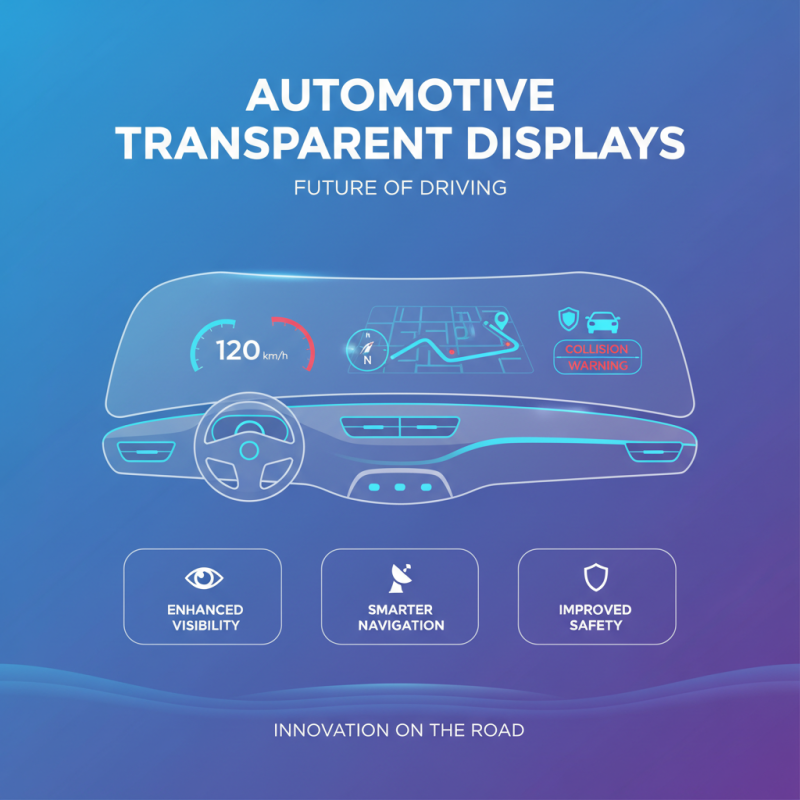
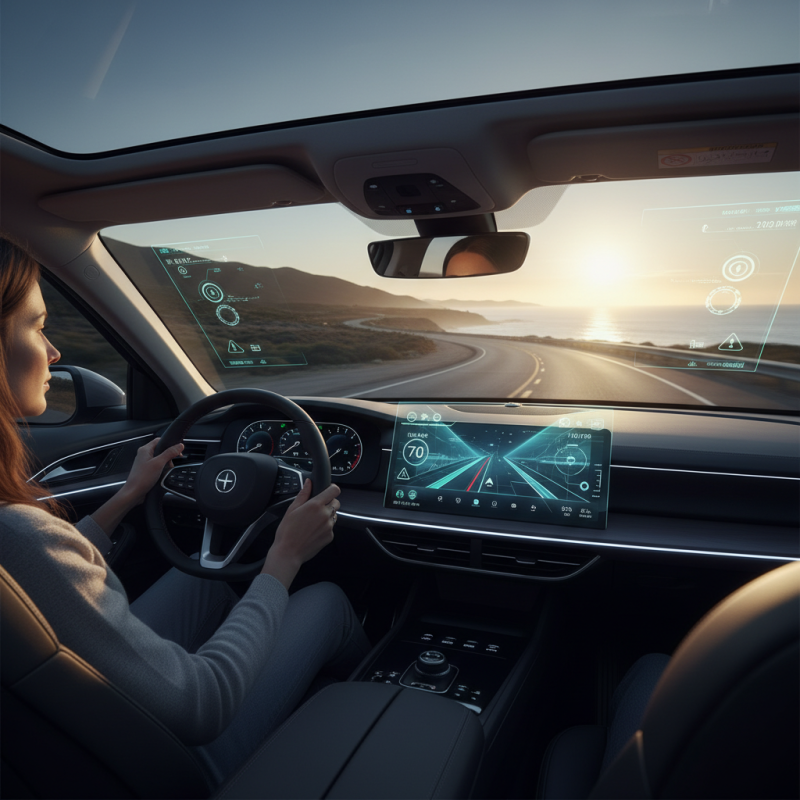
The automotive industry is evolving rapidly, especially with innovations like the Transparent Car Display Screen. This technology promises to revolutionize how drivers and passengers interact with their vehicles. Imagine driving on a clear road while essential information appears seamlessly on the windshield. Navigational details, speed limits, and even alerts can blend with the scenery.
However, there are challenges. Manufacturers must ensure that the Transparent Car Display Screen does not distract drivers. If the information is overwhelming, it could hinder rather than help. Balancing aesthetics and functionality is crucial. Users may struggle with adjusting to this new interface. Familiarity with traditional displays makes this shift significant.
As we explore the best innovations for 2026, the potential of the Transparent Car Display Screen offers an exciting glimpse into the future of driving. Yet, reflections on user experience and safety remain essential as we adapt to this cutting-edge technology.
The Rise of Transparent Car Display Screen Technology
The rise of transparent car display technology is transforming the automotive industry. This innovative feature enhances driver awareness while integrating advanced digital interfaces. According to a market report by ResearchAndMarkets, the transparent display market is projected to reach $3.5 billion by 2026. This growth reflects increasing consumer demand for futuristic vehicle designs.
Drivers crave information at a glance. Transparent displays provide real-time data without obstructing visibility. However, challenges remain. The technology must balance clarity with distraction. Studies indicate that excessive information can lead to cognitive overload. Designers face the task of simplifying interfaces while maintaining functionality.
Moreover, the cost of implementing these systems can be prohibitive. Current production methods may limit availability for mainstream vehicles. As consumers push for transparency, manufacturers must consider both innovation and practicality. The true potential of transparent displays lies in their ability to evolve while being user-friendly. Insights from user testing are crucial for refining these interfaces as this technology gains traction.
Benefits of Transparent Displays in Automotive Applications
Transparent displays in vehicles offer several advantages.
They provide critical information while allowing drivers to maintain focus on the road.
Information appears directly in the driver's line of sight, reducing distractions.
This integration enhances safety and promotes better decision-making.
Tips: Ensure that transparent displays are properly calibrated. Misalignment can lead to confusion. Regularly updating the display software can also enhance performance. Clear visualization is crucial for effective usage.
Automakers are exploring novel designs for these displays.
High-definition graphics make it easier to read information at a glance. However, relying solely on these displays can be risky.
Drivers must remain attentive, as technology should assist, not replace, their awareness.
Another interesting aspect is how these displays can be interactive.
They can change based on driving conditions. For example, the screen might show speed limits and navigation prompts dynamically.
Yet, overloading the display with too much information can overwhelm users.
Simplicity often leads to better user experience.
Future Trends in Transparent Car Display Technologies
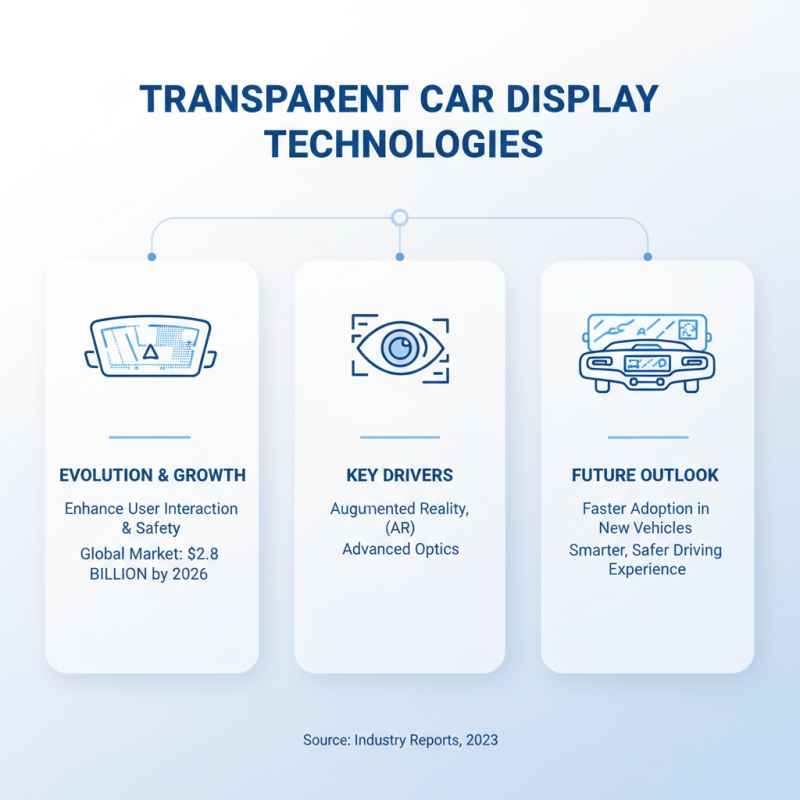
Transparent car display technologies are evolving rapidly. They enhance user interaction and safety. According to recent industry reports, the global market for such technologies is expected to reach $2.8 billion by 2026. This growth is driven by advancements in augmented reality and optics.
These displays can overlay critical information onto the windshield. Drivers can see navigation, speed, and other data while keeping their eyes on the road. However, challenges remain. For example, visibility in bright sunlight can be an issue. Reports indicate that nearly 30% of users find current displays insufficient in direct light.
Future innovations may address these limitations. Improved brightness and contrast are needed for better visibility. Additionally, integrating voice commands can reduce distractions. As the technology matures, user feedback will guide improvements. Balancing advanced features with user safety is crucial. The road ahead is promising, yet challenges must be addressed for widespread adoption.
Challenges and Solutions in Implementing Transparent Screens in Cars
Implementing transparent screens in vehicles brings both promise and challenges. While these displays can enhance aesthetics and provide real-time information, they also face significant hurdles. A recent industry report highlights that over 45% of automotive manufacturers struggle with the integration of transparent technology due to technical limitations and production costs.
One challenge is achieving clarity and visibility under various lighting conditions. Transparent screens must be visible in bright sunlight and at night. This requires advanced technology that can adapt dynamically. Moreover, maintaining the strength and durability of these displays is crucial. A study shows that transparent screens can be up to 30% more susceptible to scratching and damage compared to traditional displays.
Safety is another concern. Drivers must not be distracted by excessive information. Balancing the amount of data displayed while ensuring driver focus is essential. In fact, more than 50% of drivers express discomfort with too much information on screens. Adjusting user interfaces to provide essential information without distraction remains a significant area for improvement. Addressing these challenges can lead to safer and more effective transparent screen solutions in vehicles.
2026 Best Transparent Car Display Screen Innovations for Your Vehicle
| Feature |
Description |
Challenges |
Solutions |
| High Brightness |
Ensures visibility in direct sunlight. |
Possibility of glare affecting visibility. |
Utilization of anti-glare coatings and adaptive brightness. |
| Augmented Reality Integration |
Overlay navigational data onto the road view. |
Complexity in data accuracy and coherence. |
Developing robust algorithms for real-time data processing. |
| User Customization |
Allows users to modify display settings and layouts. |
User interface may become overly complex. |
Simplifying customizable options for user-friendliness. |
| Touch Sensitivity |
Allows interaction without physical buttons. |
Unintentional inputs while driving. |
Incorporating lock-out features while the vehicle is in motion. |
| Durability |
Resistant to weather and environmental factors. |
Potential for damage from UV exposure. |
Using advanced materials to enhance longevity. |