- Home
- Products
- About Us
- Case
- News
- BLOG
- FAQ
- Contact Us
Leave Your Message
Choosing the best Transparent Diving Screen manufacturer in China takes more than comparing a product photo or the lowest quotation. Buyers need to know where the screen will be installed, how it will be supported, and what conditions it must withstand. A pool viewing panel, an aquarium partition, and a marine installation can face very different demands. Small details matter.
A reliable supplier should explain material options, panel thickness, dimensions, edge finishing, and joining methods in clear terms. Ask for project drawings, relevant test records, and guidance on installation and maintenance. For example, a panel beside a busy pool may need different support and cleaning considerations than one used in a controlled indoor display. Exact requirements depend on the site, so broad promises are not enough. Look for answers tied to your project.
Price still matters, but it should sit beside quality control, communication, production capacity, and after-sales support. Request photos or references from comparable installations, and confirm how the company checks finished panels before shipment. A polished sample can still hide weak service. That deserves a second look. This guide will outline practical ways to compare Chinese manufacturers and ask better questions before placing an order. No single supplier is right for every project, and a confident sales pitch is not proof. Careful review helps buyers make a decision based on evidence, fit, and long-term use.
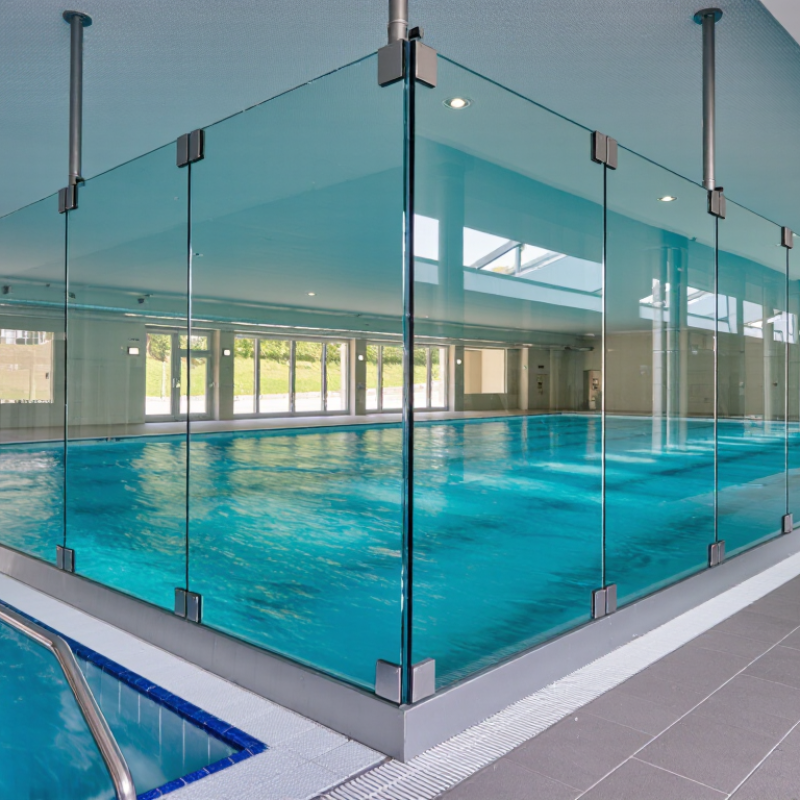
A transparent diving screen is a clear structural barrier that lets people view underwater activity while keeping water and swimmers separated. It may be installed in a pool, training tank, or aquatic viewing area. It is not simply a sheet of clear plastic. The panel, supporting frame, joints, and seals must work together under water pressure.
Many viewing screens use cast acrylic because it can provide clear sightlines and be formed for specific designs. Some projects use other materials, depending on the span, depth, and operating conditions. Thickness cannot be chosen by appearance alone. A qualified engineer should assess water depth, panel dimensions, support spacing, and expected loads before fabrication. Even a small change in span can affect structural requirements.
The viewing experience matters, too. Scratches, glare, trapped air, or slight optical distortion can make a screen less useful, especially under bright pool lighting. Clear is not always perfect. Regular inspection helps identify seal wear or surface damage before these issues grow. For buyers comparing manufacturers in China, ask for material specifications, engineering calculations, production checks, and installation guidance. A transparent screen looks simple from the outside, but its safety depends on details that are easy to overlook.
| Evaluation Dimension | Useful Fact | What to Check When Sourcing |
|---|---|---|
| Product definition | “Transparent diving screen” is not a single standardized product category. It commonly refers to a clear underwater viewing panel used in a pool, aquarium, or other water-containing structure. | Confirm the intended use, installation location, water depth, panel dimensions, and whether the panel is structural or decorative. |
| Common transparent material | Cast acrylic (PMMA) is often used for large viewing panels because it can be fabricated into thick, clear sections. Suitability depends on the design and installation conditions. | Ask for the material specification, grade, manufacturing method, and traceable material documentation. |
| Optical clarity | Clear acrylic sheet can transmit approximately 92% of visible light under suitable conditions; actual transmission varies with grade, thickness, surface finish, and measurement method. | Request the applicable optical-transmission data and clarify the test method and sample thickness. |
| Panel thickness and size | There is no universal thickness for a transparent underwater panel. Required dimensions depend on water pressure, unsupported span, support conditions, installation details, and the applicable engineering design. | Require project-specific calculations and drawings. Do not select thickness from a generic product table alone. |
| Water pressure | Hydrostatic pressure increases with water depth. For fresh water, pressure rises by approximately 9.8 kPa per metre of depth, in addition to atmospheric pressure. | Provide the design water depth and operating conditions so the panel and supporting structure can be assessed together. |
| Fabrication quality | Large acrylic panels may require controlled bonding, machining, polishing, and inspection. The finished panel’s quality depends on both material and fabrication processes. | Ask how joints are made, how edges are finished, and what inspection records are supplied for the finished panel. |
| Design and safety evidence | A clear material specification alone does not establish that a panel is safe for a particular installation. The complete assembly—including supports, seals, and connections—must suit the project. | Request project-specific engineering documentation, installation requirements, and details of the design assumptions and applicable local codes. |
| Standards and documentation | ASTM D4802 is a specification covering poly(methyl methacrylate) acrylic plastic sheet. Whether it applies to a particular product or project must be confirmed with the supplier and project engineer. | Check the exact standard edition, product scope, test reports, material certificates, and whether documents match the supplied product. |
| Supplier comparison | No manufacturer can be identified as “best” for every project without comparing its product, engineering support, production capability, and project requirements. | Compare documented experience with similar panel sizes and applications, quality-control records, lead time, packaging, installation support, and warranty terms. |
| Buyer checklist | A clear specification helps suppliers quote on a comparable basis and helps engineers evaluate the proposed solution. | Include panel shape and dimensions, water depth, support details, operating environment, required documentation, delivery location, and installation scope in the enquiry. |