Top 10 Transparent LED Flexible Screen Suppliers?
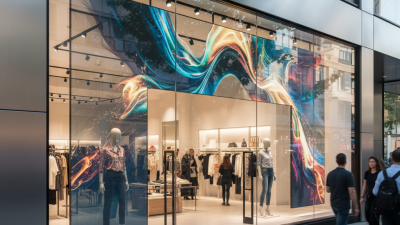
Transparent Led Flexible Screen technology is changing how brands use glass, façades, retail windows, and temporary event spaces. Unlike conventional LED walls, it can preserve daylight, display animated visuals, and adapt to curved architectural surfaces. Yet transparency alone does not guarantee a successful installation. Brightness, viewing distance, pixel pitch, bend radius, weight, heat control, and maintenance access all deserve careful examination.
Dr. Jun Wang, a display technology consultant with experience in architectural LED projects, says, “Transparency is valuable only when it serves the space, not when it becomes decoration.” That principle guides this review of the Top 10 Transparent LED Flexible Screen Suppliers. Each supplier should be judged beyond attractive product images. Manufacturing consistency matters. So does technical support after delivery.
Look closely.
A reliable supplier should provide clear brightness data, cabinet dimensions, protection ratings, control-system compatibility, and tested bending limits. Installation photographs can help, but they are not enough. Ask for project references, sample panels, warranty terms, and independent performance records. Some specifications may appear impressive while hiding weak service capacity or limited customization.
This comparison considers product quality, engineering experience, customization, delivery capability, after-sales support, and practical value. It also recognizes an uncomfortable truth: supplier rankings are rarely permanent. A company may lead in lightweight design but struggle with large-scale support. Another may offer excellent engineering but higher costs. Buyers should verify every important claim before making a final decision.
What Are Transparent LED Flexible Screens and How Do They Work?
Top 10 Transparent LED Flexible Screen Suppliers?
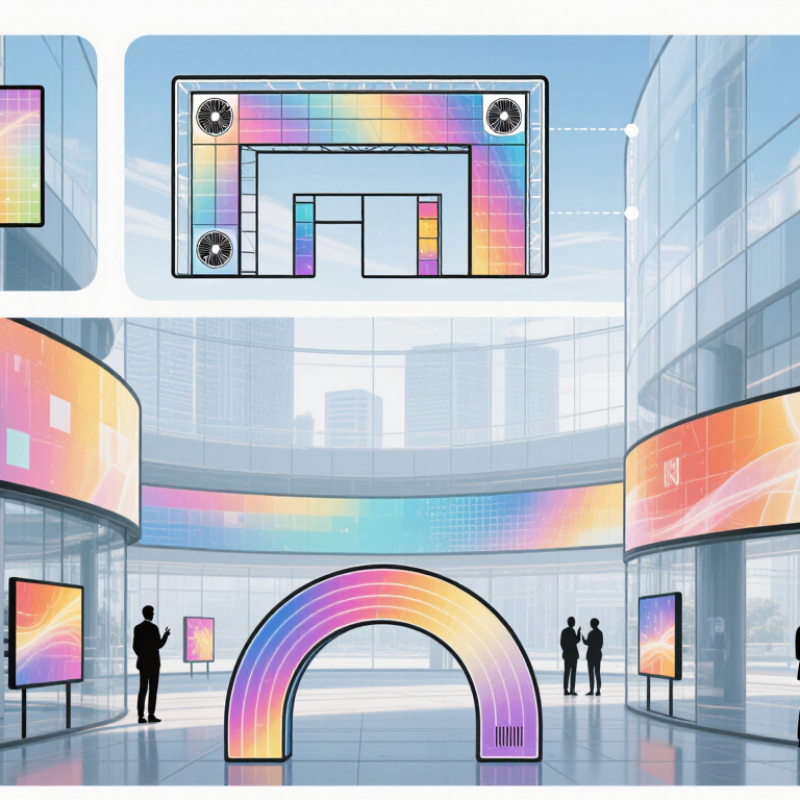
Transparent LED flexible screens combine light-emitting diodes with open, bendable modules. Their structure allows light and scenery to pass through the display. LEDs create pixels, while driver chips control brightness, color, and refresh rates. A sending card transfers video data from the processor. Power supplies feed each module.
The term flexible is often overstated. Many panels curve smoothly, but they cannot fold like fabric. Pixel pitch, viewing distance, module weight, and bending radius affect image quality. A tighter curve may produce visible distortion. Field testing matters. For example, a 3-millimeter pitch screen usually suits close viewing, while larger pitches work better on building façades.
Market data supports growing demand. MarketsandMarkets projects the global LED display market to rise from about USD 7.4 billion in 2023 to USD 11.7 billion by 2028. Grand View Research also identifies retail, advertising, and architectural environments as major transparent-display applications. Energy use still deserves careful review. Brightness, operating hours, ventilation, and control settings can change real consumption sharply. I would not judge suppliers by transparency alone. Ask for measured transparency, power data, bend-radius tests, IP ratings, refresh performance, and maintenance records. Some specifications look impressive on paper. Real installations can disagree.
Key Features for Comparing Transparent LED Flexible Screen Suppliers
Top 10 Transparent LED Flexible Screen Suppliers?
Comparing suppliers requires more than checking a product gallery. Start with transparency, pixel pitch, brightness, and viewing distance. A showroom display may look impressive under controlled lighting. Real installations face sunlight, reflections, dust, and uneven walls. Ask for measured data, not general claims. Request videos from completed projects and a working sample.
Flexibility is equally important. Check the minimum bending radius, screen weight, module size, and installation method. A lighter panel can reduce structural pressure on glass façades. However, extreme flexibility may affect durability or image uniformity. Ask how the supplier tests repeated bending. I once focused too heavily on bend performance. Later, cable routing became the bigger problem. That mistake changed my comparison checklist.
Reliable suppliers explain refresh rate, grayscale performance, color consistency, heat management, and service access. Confirm whether brightness can be adjusted for indoor and outdoor conditions. Examine waterproof ratings when the screen is exposed to weather. Safety certifications, production quality control, warranty terms, spare parts, and response times also matter. A clear quotation should separate screen costs, controllers, software, delivery, installation, and maintenance. Test samples under your actual lighting whenever possible. Small gaps often appear only after installation. Supplier experience is useful, but documented testing is stronger evidence.
Top 10 Transparent LED Flexible Screen Suppliers: Key Comparison Criteria
This neutral procurement benchmark shows the recommended importance of measurable factors when comparing transparent LED flexible screen suppliers. Product performance, installation flexibility, reliability, and supplier support are weighted separately to avoid relying on brand names alone.
Top 10 Transparent LED Flexible Screen Suppliers by Product Strengths
Top 10 Transparent LED Flexible Screen Suppliers by Product Strengths
The strongest suppliers differ by engineering focus, not marketing language. A custom-design supplier suits irregular atriums and retail windows. A fine-pitch specialist delivers sharper visuals at close viewing distances. High-brightness manufacturers perform better in sunlit façades, where 5,000 nits may be necessary. Lightweight suppliers reduce structural pressure during temporary installations. Curved-screen experts support tighter bends, but every claimed bend radius needs testing.
Rental-focused suppliers usually provide faster assembly, protective cases, and modular spare parts. Outdoor specialists should offer sealed cabinets, stable brightness control, and tested ingress protection. Control-system suppliers improve synchronization, grayscale performance, and remote monitoring. Energy-conscious manufacturers may use efficient power supplies and thinner transparent modules. Service-led suppliers stand out through local technicians, documented warranties, and replacement panels that match older batches. These are ten practical strengths for comparing suppliers without relying on brand reputation.
Ask for measured transparency, pixel pitch, refresh rate, viewing angle, weight, and minimum bend radius. Request a powered sample, not only polished photographs. Check whether brightness remains consistent across a two-meter panel. Small details matter. Installation teams often discover weak connectors, unclear manuals, or uneven seams too late. A supplier may excel in display quality yet struggle with delivery discipline. That weakness should remain visible in the evaluation. Project references, factory inspection records, and burn-in test reports provide stronger evidence than impressive claims. The best choice depends on viewing distance, installation geometry, climate, content type, and maintenance access.
Top 10 Transparent LED Flexible Screen Suppliers by Product Strengths
Anonymous supplier profiles compared by publicly common product specifications and application strengths
| Rank |
Anonymous Supplier Profile |
Primary Product Strength |
Typical Pixel-Pitch Range |
Typical Transparency Range |
Typical Brightness Range |
Flexibility / Curvature Capability |
Typical Protection Level |
Best-Fit Applications |
Product Strength Score |
| 1 |
Supplier Profile 01 |
Fine-pitch transparent display engineering |
P2.6–P10 |
70%–90% |
4,500–6,000 nits |
Flexible modules; curved installation supported with project-specific radius design |
IP30–IP65, depending on configuration |
Premium retail façades, museums, corporate atriums and indoor advertising |
9.4/10 |
| 2 |
Supplier Profile 02 |
High-transparency window and glass-wall integration |
P3.9–P10 |
75%–90% |
4,000–5,500 nits |
Lightweight flexible strips or modules for flat and gently curved surfaces |
IP30–IP65 |
Shopping malls, airports, commercial windows and showroom glazing |
9.2/10 |
| 3 |
Supplier Profile 03 |
Outdoor brightness and weather-resistant construction |
P3.9–P10 |
60%–85% |
5,000–7,000 nits |
Flexible cabinet or module options for curved outdoor façades |
IP65 front and rear on selected outdoor models |
Building façades, outdoor media, event venues and transport hubs |
9.0/10 |
| 4 |
Supplier Profile 04 |
Ultra-lightweight flexible LED mesh solutions |
P3.9–P10 |
65%–90% |
3,500–5,500 nits |
Low-weight mesh design; suitable for irregular or suspended structures |
IP30–IP65 |
Stage backdrops, temporary installations, atriums and creative architecture |
8.8/10 |
| 5 |
Supplier Profile 05 |
Large-format transparent façade systems |
P4.8–P16 |
65%–85% |
4,500–6,500 nits |
Modular panels for broad flat façades and controlled-radius curves |
IP65 for selected exterior configurations |
Commercial towers, stadium exteriors and large-scale advertising |
8.7/10 |
| 6 |
Supplier Profile 06 |
Rental and touring-friendly transparent screens |
P3.9–P10 |
60%–85% |
4,000–6,000 nits |
Quick-assembly flexible or semi-flexible panels with lightweight frames |
IP30–IP65, depending on rental series |
Concerts, exhibitions, brand activations and touring productions |
8.5/10 |
| 7 |
Supplier Profile 07 |
Custom-shaped and creative architectural displays |
P2.9–P10 |
65%–88% |
3,500–5,500 nits |
Custom cutting, segmented curves and non-standard geometry available by project |
IP30–IP65 |
Art installations, themed entertainment, retail design and feature walls |
8.4/10 |
| 8 |
Supplier Profile 08 |
Energy-efficient transparent display configurations |
P3.9–P10 |
70%–88% |
3,000–5,000 nits |
Flexible indoor modules and low-power transparent mesh options |
IP30–IP54 |
Retail interiors, office reception areas and smart-building displays |
8.2/10 |
| 9 |
Supplier Profile 09 |
Fine-pitch indoor transparent LED solutions |
P2.6–P6.25 |
65%–85% |
1,500–4,500 nits |
Flexible modules for indoor curves, columns and compact viewing distances |
IP20–IP30 |
Control rooms, retail interiors, hospitality and corporate presentation spaces |
8.1/10 |
| 10 |
Supplier Profile 10 |
Cost-effective standard transparent LED products |
P3.9–P16 |
60%–85% |
3,500–5,000 nits |
Standard flexible strips or panels; best suited to simple flat or gentle curves |
IP30–IP65 on selected models |
Commercial advertising, small retail projects and event decoration |
7.9/10 |
Note: Specifications are representative market ranges for transparent LED flexible screen product categories. Actual performance, dimensions, protection ratings, viewing distance and bending radius vary by model and project configuration and should be confirmed in the supplier’s current technical datasheet.
How to Evaluate Quality, Customization, Installation, and Support
Top 10 Transparent LED Flexible Screen Suppliers: How to Evaluate Quality, Customization, Installation, and Support
A strong supplier should prove performance, not only show attractive videos. Check pixel pitch, brightness, refresh rate, viewing angle, and transparency under real lighting. Ask for cabinet weight and power consumption. These details affect structural safety and operating cost. MarketsandMarkets’ 2024 Transparent Display Market report projects continued growth through 2028, driven by retail, events, and architectural applications. Growth attracts inexperienced suppliers too. Be careful.
Request a sample panel before signing a large order. Inspect seams, LED alignment, cable routing, and color consistency from three viewing distances. For flexible screens, confirm the minimum bending radius and repeated-bend test results. Customization should include dimensions, mounting method, control system, content format, and weather protection. Installation plans must show fixing points, ventilation, power distribution, and access for maintenance. A supplier offering only a finished price is not enough.
Tips: Ask for an independent test report, warranty terms, spare-parts ratios, and response times. Require a site survey for complex façades. Confirm who handles commissioning and operator training. The U.S. Department of Energy reports that lighting and display systems can represent meaningful commercial energy loads, so request measured power data rather than estimates. In practice, installation is often underestimated. I would also budget for replacement modules, even when the supplier promises perfect reliability. That may feel pessimistic, but it protects the project.
Which Supplier Best Fits Your Project Requirements?
Choosing among the top ten transparent LED flexible screen suppliers requires more than comparing pixel pitch and prices. Your project may need a curved retail display, a lightweight stage backdrop, or a weather-resistant façade. Each application changes the ideal supplier. Ask for brightness measurements, viewing-angle data, bend radius limits, power consumption, and installation drawings. Technical answers should be clear, not vague.
A reliable supplier should provide sample panels, recent project references, test reports, and written warranty terms. Check how the screen behaves after several hours of operation. Look for uneven brightness, visible seams, heat buildup, or difficult cable access. Small details matter. A strong engineering team can adapt cabinet dimensions, control systems, and mounting methods to your site. Factory quality checks and responsive after-sales support also reduce project risk.
Do not choose from a ranking alone. A low-cost option may suit a short indoor campaign, while a high-performance solution may justify its cost in a busy transport hub. I have found that sample testing often reveals weaknesses hidden in polished proposals. Still, one test cannot represent every condition. Request a full-scale trial when possible, especially for curved surfaces or outdoor exposure. The best-fit supplier is the one that understands your operating environment, documents its claims, and accepts practical questions before payment.