China’s vehicle electronics industry has developed a broad network of specialized display manufacturers. These companies serve buses, trucks, logistics vehicles, construction equipment, emergency fleets, and passenger cars. A Vehicle Mounted Screen must handle vibration, dust, temperature changes, and constant movement. It is not simply a tablet fixed to a dashboard.
This guide examines China’s leading manufacturers through practical and verifiable criteria. These include display brightness, touch performance, viewing angles, operating systems, connectivity, enclosure design, and quality control. Factory experience matters. So does the ability to provide drawings, samples, testing records, and responsive technical support. Some suppliers focus on rugged industrial panels. Others develop smart terminals with GPS, cameras, fleet software, and wireless communication.
Details matter. A screen that looks clear indoors may become unreadable under direct sunlight. A strong specification sheet may not explain long-term heat performance. Buyers should request sample units and test them inside real vehicles. Check mounting strength, cable routing, boot time, and touch accuracy with gloves. Ask how replacement parts are managed after delivery.
No ranking is permanently correct. Product quality can vary between models, batches, and project requirements. Therefore, this overview avoids relying only on promotional claims. It considers manufacturing capability, documented experience, customization options, and customer feedback where available. Some conclusions may still require further verification. That is a useful limitation, not a weakness. Careful comparison helps fleet operators choose a reliable Vehicle Mounted Screen partner for safer, clearer, and more efficient in-vehicle operations.
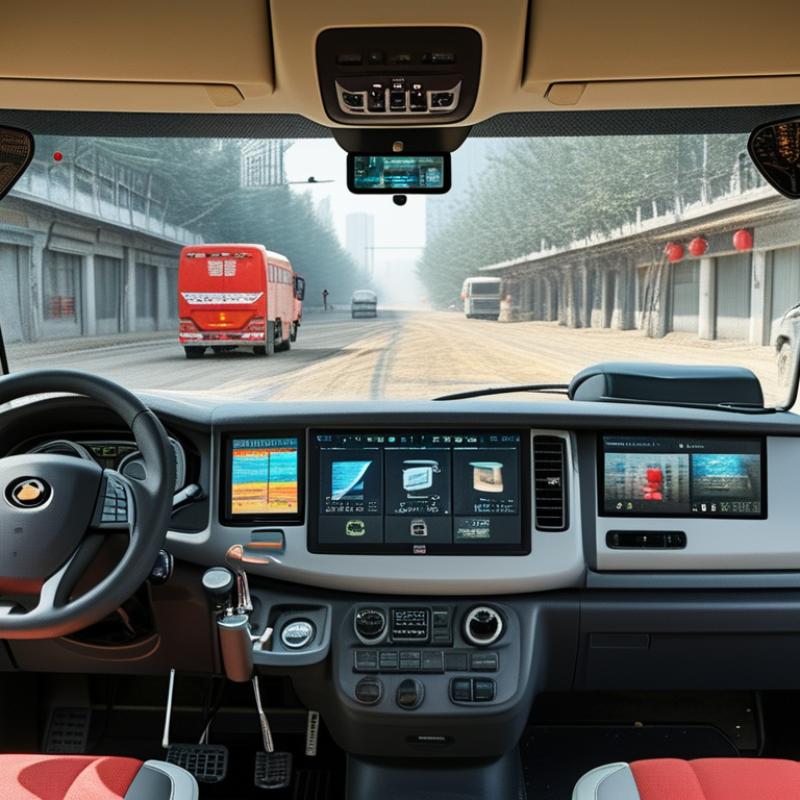
China Top Vehicle Mounted Screen Manufacturers
Vehicle-Mounted Screens: Definition, Functions, and Main Applications
A vehicle-mounted screen is a display installed on a bus, truck, van, trailer, or specialty vehicle. It usually combines a rugged panel, protective housing, power controller, and communication interface. Unlike indoor displays, it must tolerate vibration, dust, sunlight, moisture, and changing temperatures. Visibility matters. Brightness, anti-glare treatment, and automatic dimming are essential for readable content during daytime and night operation.
These screens deliver route information, public announcements, safety messages, advertisements, and live operational data. Transit operators may show stop names and service updates. Logistics teams can display loading instructions or delivery status. In mobile command vehicles, the screen supports maps, camera feeds, and incident coordination. Emergency response applications require stable power, clear graphics, and dependable network connections. Outdoor events also use mobile displays for schedules and crowd guidance.
Reliable manufacturers in China typically evaluate brightness, viewing angle, enclosure protection, thermal control, and mounting strength before production. Installation quality matters as much as panel performance. A loose bracket can create noise, damage connectors, or reduce screen life. Weather changes everything. Field testing should include road vibration, direct sunlight, rain exposure, and extended operation. A higher brightness rating is not automatically better; excessive output can distract drivers and increase energy use. This detail is often underestimated. Product selection should match the vehicle, route, climate, viewing distance, and local operating requirements.
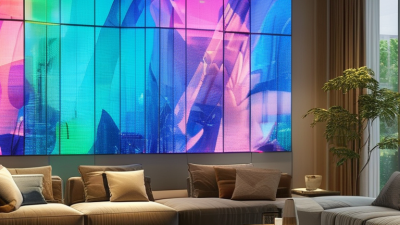
Vehicle-mounted screens are rugged displays installed inside or outside vehicles to provide navigation, fleet data, camera images, passenger information, equipment controls, and safety alerts. The chart presents representative typical diagonal sizes used across major application areas; actual specifications vary according to vehicle type, viewing distance, operating environment, and required functions.
China’s vehicle-mounted screen manufacturing landscape is broad, practical, and increasingly specialized. Production centers combine display assembly, metal fabrication, embedded software, and vehicle electronics testing. A typical factory may inspect a 12.3-inch panel under bright light, then test it inside a temperature chamber. This hands-on process reveals issues that product brochures rarely mention. Glare, vibration, and cable routing can matter more than resolution. Small details matter.
Experienced manufacturers usually begin with vehicle type, installation position, viewing angle, and power conditions. Commercial fleets often need larger displays, physical controls, and clear information in changing light. Passenger vehicles may require thinner housings and tighter integration with existing systems. Suppliers also evaluate heat, dust, moisture, electromagnetic compatibility, and continuous operation. Reliable production depends on traceable components and repeatable inspections, not attractive samples alone. That distinction is important.
The market is not perfectly consistent.
Some workshops offer quick customization but lack long-term environmental data. Others have strong engineering teams yet communicate poorly about software updates or replacement parts. Buyers should request test records, wiring diagrams, sample approvals, and failure-response procedures. It is also useful to inspect screen readability after several hours of vibration testing. One weakness remains. After-sales coordination can be slower when responsibilities cross factories. Clear documentation and a named technical contact reduce this risk, though they cannot remove it entirely.
China’s vehicle-mounted screen sector is not one market. It includes OEM display integrators, fleet electronics manufacturers, aftermarket rugged-screen suppliers, and specialty producers for construction vehicles. Each type serves a different operating condition. OEM integrators prioritize dashboard fit, CAN bus communication, thermal control, and long validation cycles. Their screens often use laminated panels, anti-glare coatings, and brightness above 800 nits for harsh sunlight.
Aftermarket manufacturers usually offer faster installation and wider compatibility. Their products may include 7-inch to 15-inch touchscreens, wireless connectivity, GPS integration, and rear-camera inputs. Rugged suppliers focus more on shock resistance, sealed connectors, and wide-temperature operation. Berg Insight reported that active fleet management systems in Europe and North America exceeded 30 million units combined in 2023. This growth supports demand for screens that display route warnings, driver behavior, and vehicle diagnostics. Small screens still dominate many fleets.
Specialty manufacturers build customized displays for buses, mining vehicles, agricultural machinery, and public-service fleets. Their priorities include glove-friendly controls, sunlight readability, and stable operation under vibration. MarketsandMarkets identifies automotive display growth above 7% annually through the late 2020s, but forecasts vary by product definition. That matters. A supplier may claim strong market leadership while measuring only shipments, not field reliability. Buyers should request thermal test records, ingress protection evidence, software update procedures, and failure-rate data. Some attractive prototypes still lack dependable long-term support. That weakness deserves attention.
China Top Vehicle Mounted Screen Manufacturers
Modern vehicle-mounted screens depend on more than bright displays. Their core systems combine high-resolution panels, touch sensors, processors, and rugged control units. In practical testing, sunlight readability remains a major challenge. Anti-glare coatings and automatic brightness control help drivers read maps without harsh reflections. However, excessive brightness can disturb night vision. Heat changes everything.
Many advanced screens use capacitive touch technology with glove-friendly tuning. This matters in cold workshops, logistics yards, and outdoor service areas. Optical bonding reduces internal reflections and improves contrast. It also limits dust and moisture entry between the panel layers. Sealed housings commonly use reinforced glass, vibration-resistant mounts, and thermal management channels. These details protect the display during rough road movement.
Connectivity is equally important. Modern units may support vehicle networks, wireless communication, cameras, navigation data, and remote diagnostics. Engineers must manage signal stability, cybersecurity, and power fluctuations together. A screen that works well in a laboratory may fail after repeated vibration cycles. That gap deserves attention. Manufacturers should document temperature tests, impact resistance, viewing angles, and touch response before production approval. Some designs still compromise between thinness, cooling, and serviceability. Technicians often discover this during installation. Reliable suppliers provide clear testing records and practical replacement procedures, not only attractive specifications.
| Technology or Design Dimension | Common Technical Implementation | Typical Industry Data or Range | Primary Benefit for Vehicle-Mounted Screens | Key Engineering Considerations |
|---|---|---|---|---|
| TFT-LCD Display Panel | Active-matrix thin-film transistor liquid-crystal panel with LED backlighting | 7–15 inches is common for cabin displays; full-HD resolution is widely used in larger automotive screens | Provides a mature supply chain, stable image quality, and relatively predictable cost | Requires careful thermal management, backlight control, and optical treatment to maintain readability in sunlight |
| AMOLED or OLED Display | Self-emissive organic light-emitting diode pixels without a conventional backlight | Can provide very high contrast, with black-level performance approaching zero luminance in dark areas | Enables slim modules, strong contrast, fast response, and curved or flexible display designs | Long-term brightness retention, thermal conditions, and image-retention management must be evaluated |
| Projected Capacitive Touch | Glass touch sensor detects changes in capacitance caused by a finger or compatible stylus | Supports multi-touch input and can be designed with a cover glass generally around 1–3 mm thick | Delivers intuitive interaction and supports gesture controls such as tap, swipe, and pinch | Glove operation, water rejection, electromagnetic compatibility, and accidental-touch prevention require software and hardware tuning |
| Optical Bonding | Display layers are bonded with optically clear adhesive instead of leaving an air gap | Reduces internal reflections and improves perceived contrast compared with a conventional air-gap structure | Improves outdoor readability, touch sensitivity, shock resistance, and resistance to dust or condensation intrusion | Adhesive selection, bubble control, curing process, repairability, and thermal expansion matching are critical |
| High-Brightness Backlight | High-output LED backlight with automatic brightness control using an ambient-light sensor | Automotive display designs commonly target approximately 500–1,500 cd/m², depending on location and sunlight exposure | Maintains legibility under direct or strong ambient light while reducing unnecessary power consumption at night | Higher brightness increases heat generation and power demand; uniformity and LED lifetime must be controlled |
| Anti-Glare and Anti-Reflection Surface | Matte surface texture, low-reflection coating, or multilayer optical film applied to the cover lens or display stack | Surface reflection is commonly targeted below approximately 2–4% for demanding outdoor-viewing applications | Reduces reflections from sunlight, dashboard surfaces, and cabin lighting | Surface treatment must balance haze, sharpness, scratch resistance, fingerprint visibility, and cleanability |
| Wide Viewing Angle | In-plane switching or similar LCD technology, combined with optical compensation films | Modern automotive LCDs can reach approximately 85° or more viewing angle in both horizontal and vertical directions, depending on contrast criteria | Allows drivers and passengers to view content from different seating positions with less color or contrast shift | Viewing-angle specifications should be checked together with brightness, contrast, color shift, and polarization behavior |
| Automotive-Grade Temperature Design | Wide-temperature display materials, reinforced mechanical structure, and thermal monitoring | Many automotive electronic components are designed around a functional range near −40°C to +85°C; the exact range depends on installation location | Supports operation during cold starts, hot cabin conditions, and rapid temperature changes | LCD response time, liquid-crystal viscosity, adhesive performance, condensation, and component derating must be validated |
| Vibration and Shock Resistance | Rigid mounting, reinforced bezel, locking connectors, and validated display bonding structure | Testing is commonly performed against automotive environmental requirements such as ISO 16750 and applicable vehicle-level specifications | Improves reliability under road vibration, pothole impacts, and repeated mechanical loading | Resonance frequency, mounting torque, connector retention, panel flex, and screen cracking risk require testing as a complete assembly |
| EMC and EMI Protection | Shielding, filtered power input, controlled grounding, PCB layout optimization, and robust communication design | Automotive products are commonly evaluated against requirements such as CISPR 25 for conducted and radiated emissions | Reduces interference with radios, sensors, control units, and other vehicle electronics | Display cables, touch controllers, switching backlights, and high-speed interfaces can become significant noise sources |
| Automotive Communication Interfaces | CAN or CAN FD for vehicle data, plus Ethernet, USB, LVDS, or MIPI interfaces for high-speed display and multimedia functions | High-resolution video links commonly use dedicated high-speed differential interfaces; CAN FD supports data rates up to approximately 8 Mbit/s in suitable configurations | Enables integration with instrument clusters, cameras, navigation systems, diagnostics, and vehicle controls | Interface selection depends on bandwidth, cable length, cybersecurity, latency, EMC performance, and system architecture |
| Camera and Video Integration | Digital video input connected to rear-view, surround-view, or driver-monitoring camera systems | Camera display systems require low-latency processing; practical system latency targets are often kept below approximately 100 ms for responsive viewing | Supports parking assistance, blind-spot awareness, digital mirrors, and cabin monitoring functions | Image distortion correction, low-light performance, water or dirt on the lens, cybersecurity, and failure warnings must be addressed |
| Touch Haptic Feedback | Linear resonant actuators, piezoelectric actuators, or controlled vibration motors integrated into the display assembly | Feedback is typically tuned within the human-perceivable vibration range, with response timing commonly designed for a few hundred milliseconds or less | Confirms user input and can reduce the need for visual attention while driving | Actuator placement, vibration transmission, acoustic noise, durability, and user-safety requirements require validation |
| Anti-Fingerprint and Hard-Coat Protection | Oleophobic coating combined with chemically strengthened or tempered cover glass | Cover glass hardness is frequently specified around 7–9H in product-level scratch-resistance testing, depending on the test method | Improves cleanability, surface durability, and long-term appearance | Scratch resistance does not automatically indicate impact resistance; drop, abrasion, chemical, and cleaning-agent tests are also required |
| Low-Power and Thermal Management | Adaptive brightness, local backlight control, efficient display ICs, heat spreaders, and temperature-based derating | Power consumption varies significantly by size and brightness; a typical cabin display may operate from several watts to more than 20 W | Reduces electrical load and helps maintain component reliability in enclosed dashboards or overhead units | Peak brightness, processor workload, sunlight exposure, ventilation, and standby-mode requirements all affect thermal design |
Note: The figures shown are representative industry ranges or commonly referenced engineering targets. Actual specifications depend on screen size, vehicle location, application class, environmental requirements, and validation standards.
Selecting a Chinese vehicle-mounted screen manufacturer requires more than comparing quotations. Check whether the factory understands vibration, dust, moisture, sunlight, and unstable vehicle power. Ask for test records covering operating temperature, shock resistance, brightness, and continuous operation. A screen that looks sharp indoors may become unreadable at noon.
Request a working sample before discussing large orders. Test it inside a moving vehicle, with gloves, reflected sunlight, and engine vibration. Inspect connector locks, cable length, mounting brackets, and touch response. Confirm the panel remains stable after repeated power cycles. Small details matter. Ask how the manufacturer controls dead pixels, color consistency, and waterproof sealing. A factory audit should include assembly lines, aging-test areas, incoming material inspection, and final inspection records. A polished factory tour can still mislead.
Review technical drawings, warranty terms, spare-part availability, and response times in writing. Reliable manufacturers explain limitations instead of promising everything. Check whether engineers join technical calls and provide clear revision histories. Confirm compliance with the regulations required in your target market, supported by authentic test documentation. Price deserves attention, but an unusually low quote may reflect weaker components or incomplete testing. No evaluation is perfect. I would keep a risk list, update it after each sample, and leave room for one uncomfortable question: what happens when the screen fails during daily service?